In addition to Chef Garbo’s passion for cooking, she also enjoys writing about food. She has submitted several food news articles to Personal Chef Magazine, the official Publication for Personal Chefs, which is published quarterly by The United States Personal Chef Association (USPCA). Below are several published articles by Chef Garbo.
Contact Chef Garbo Now
San Francisco Personal Chef Garbo Presents a Festive Holiday Salad & Sparkling Mead Cocktail – October 2014
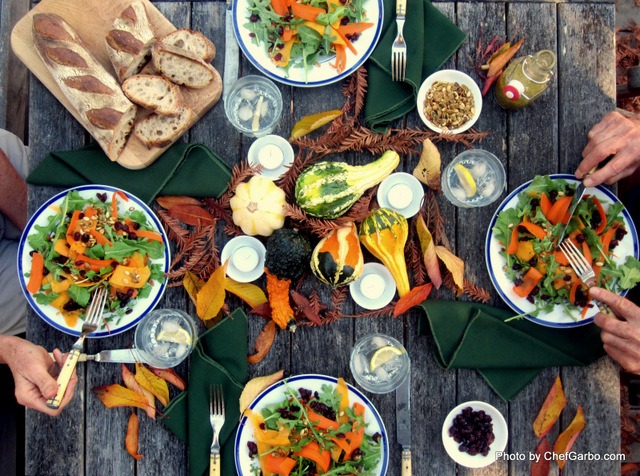
Shaved Butternut Squash Salad – Gluten Free
With Thanksgiving approaching I thought it fitting to present two simple yet elegant recipes in keeping with the spirit of the Holidays. I always love a fun cocktail to accompany my meals so I crafted a Fall inspired sipper combining apple cider and sparkling mead by Heidrun Meadery that’s paired with an autumn colored tossed green salad made from shaved butternut squash, peppery arugula & a grainy mustard vinaigrette. The light and refreshing bubbles of the sparkling mead cocktail is perfect with the salad. Enjoy!
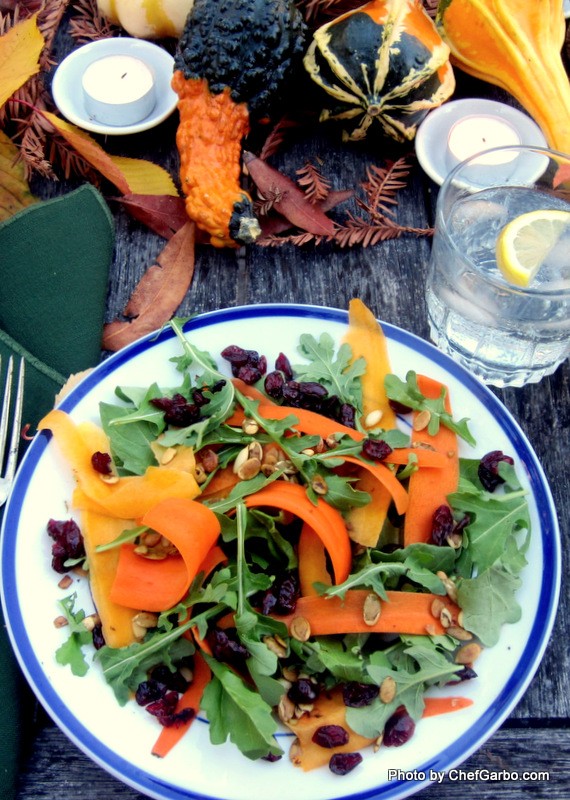
Shaved Butternut Squash Salad with Pepitas & Dried Cranberries- Gluten Free
Shaved Butternut Squash Salad
Ingredients:
2 Tablespoons white balsamic vinegar
3 tablespoons extra-virgin olive oil
1 teaspoon whole-grain mustard
2 scallions minced, white portion
1 teaspoon ground pepper
1 teaspoon salt
1 cup butternut squash, peeled, then shaved with peeler.
1 cup carrots, shaved
6 cups fresh arugula, freshly packed
½ cup dried cranberries
¼ cup toasted pepitas or sunflower seeds
Instructions:
Combine the first six ingredients in a small jar with a lid and shake vigorously to combine. Pour into a medium bowl. Shave off butternut squash & carrot and marinate in dressing for 15 to 30 minutes. Add arugula & toss to combine. Top with dried cranberries & toasted pepitas.
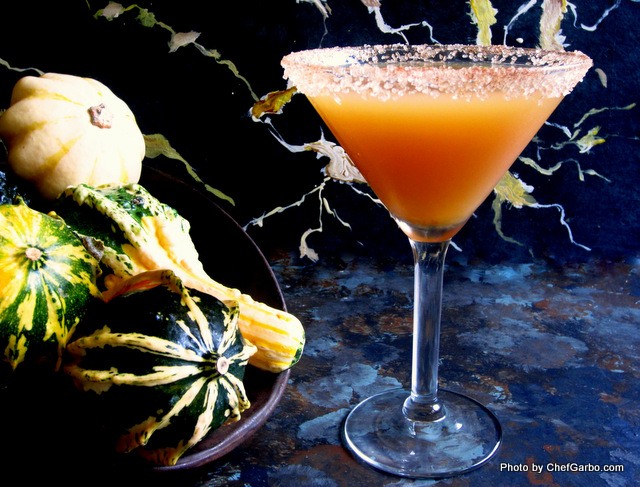
Sparkling Mead Cider Cocktail
Sparkling Mead & Cider Cocktail
½ cup apple cider
1 shot vodka
1 Dash cinnamon
1 Dash nutmeg
1 tsp maple syrup
½ cup Heidrun CA Orange Blossom Sparkling Mead
(or Prosecco)
1 teaspoon each of coarse sugar and ground cinnamon (garnish)
Combine coarse sugar & cinnamon in a shallow bowl. In another shallow bowl pour a bit of the apple cider. To rim glasses, first dip the glass rim in the apple cider then dip into the sugar cinnamon mixture. In a shaker combine the cider, vodka, cinnamon, nutmeg and maple syrup with ice. Shake well and pour into champagne or martini glass ¾ full and top with Heidrun sparkling mead or champagne. Click here to purchase Heidrun CA Orange Blossom Sparkling Mead.
Note: If you’re really short on time and ingredients then fill each flute with a mixture of 3/4 champagne to 1/4 cider and voila!
San Francisco Personal Chef Garbo Celebrates Summer’s Last Hurrah with Sexy Ribs & Boozy Pops – August 26, 2014
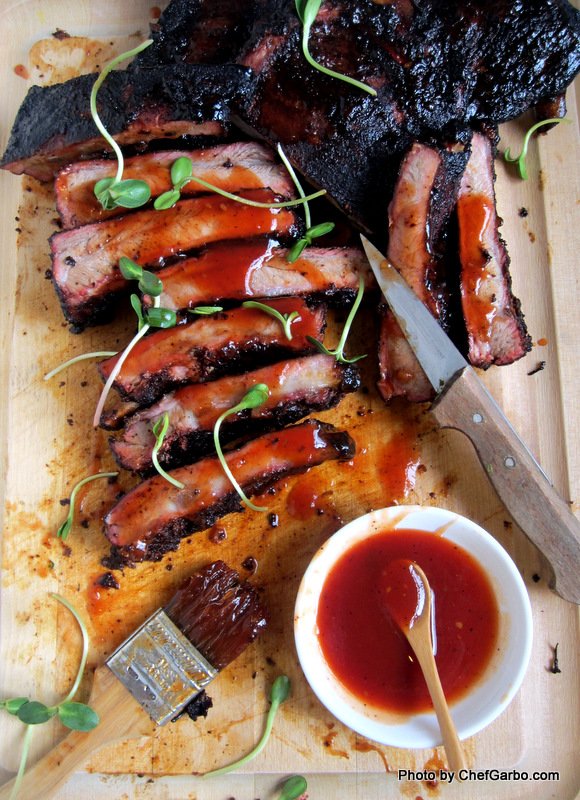
Baby Back Pork Ribs with Bone Suck’n Sauce – Gluten Free
Years ago I seduced my beau over a rack of ribs. Yup, I wore my food and it was love at first bite for him, regarding me. You can’t be too polite when it comes to eating bone suck’n ribs. You have to dive right in with gusto, and if it means getting the sauce on your face and in your hair, then so be it. I love ribs and I don’t mind wearing them either!
You see, BBQ ribs are a thing of passion for many folks, especially when it comes to the method in which they are prepared. I believe that pork ribs are best cooked slow and low so that the connective tissues break down and the fat is rendered. This technique delivers a tender, fall off the bone rib that melts in your mouth. A spice rub is the Pièce de Résistance when it comes to succulent deliciousness.
BBQ Baby Back Pork Ribs
Servings: 6
FOR THE SPICE RUB AND RIBS
2 tablespoon(s) cumin, ground
1 tablespoon(s) chili powder
1 tablespoon(s) mustard, dry
1 tablespoon(s) salt, coarse
1 1/2 teaspoon(s) cayenne
1 1/2 teaspoon(s) cardamom, ground
1 1/2 teaspoon(s) cinnamon, ground
6 pound(s) pork ribs, baby back
1 Jar of Bone Suck’n Sauce
DIRECTIONS FOR SPICE RUB:
Mix first 7 ingredients in medium bowl. Rub spice mixture over both sides of rib racks. Arrange ribs on large baking sheet. Cover and refrigerate overnight.
Slow cook ribs in 325 degree oven for 2-3 hours until meat falls off the bones. Baste with Bone Suck’n Sauce during last half hour at 10 minute intervals or to your liking.
Boozy Mojito Ice Pops
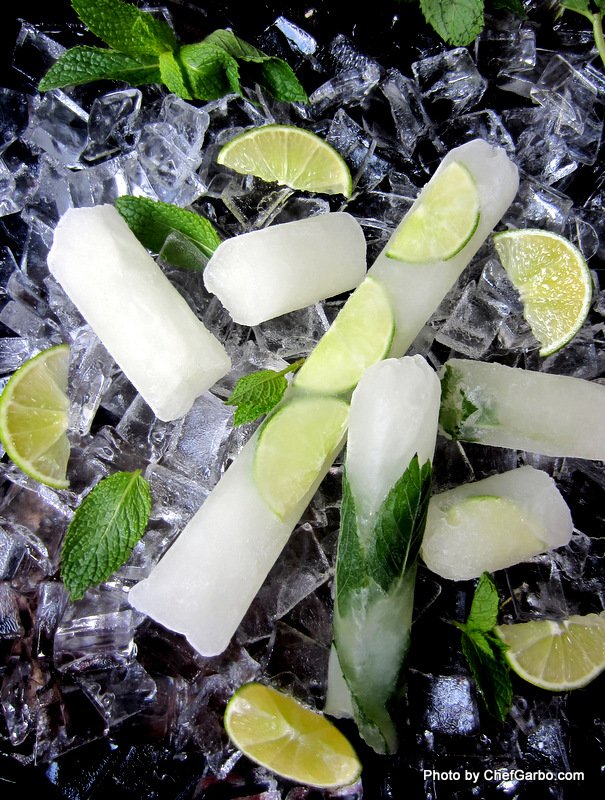
Mojito Lime Ice Pops
I love anything to do with cocktails so when I stumbled upon these icy beauties I was inspired to create my own boozy concoctions. They’re super easy and tasty too. What a way to end your Labor Day!
To purchase ice pop bags by FRIOPOP click here.
To purchase BPA free ice pop bags by ZIPSICLE click here.
Recipe for Mojito Ice Pops
Makes 8 Pops
1 cup lime juice
1 1/2 cups light rum
3/4 cup triple sec
1 cup soda water
3 tablespoons mint, finely chopped
Mix all the ingredients in a measuring bowl with pour spout. Fill the bags, tie, and freeze for at least 8 hours.
TIP: Alcohol does not freeze so these pops will not get completely frozen. The more alcohol the less firm they’ll be. If you turn your freezer up you should be fine.
Bloody Mary Ice Pops
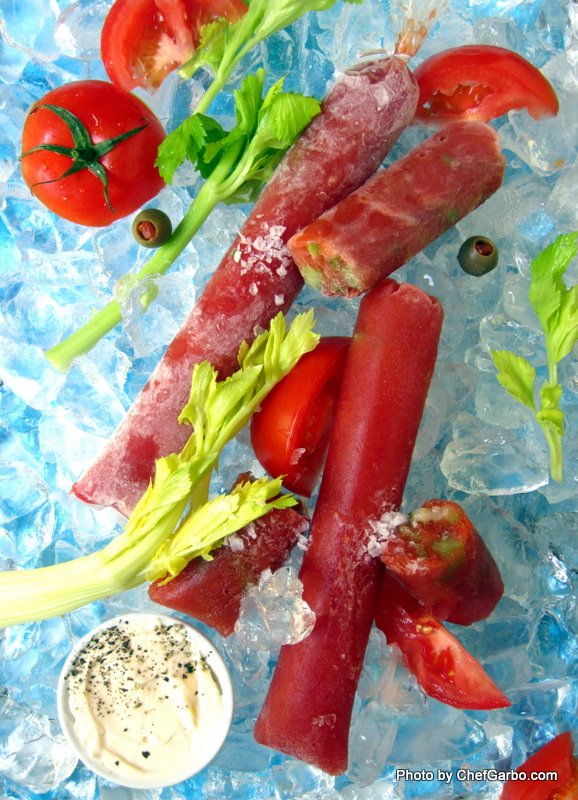
Bloody Mary Ice Pops
Recipe for Bloody Mary Ice Pops
Makes 8 Pops
3 cups good quality tomato juice
juice of 2 limes
grated zest of 1 lime
2 teaspoons grated horseradish
dash of Worcestershire
few drops of hot sauce
1/2 cup vodka
salt & pepper, to serve
In a large bowl, mix tomato juice, lime juice, lime zest, horseradish, Worcestershire, hot sauce, and vodka. Mix well. Fill the bags with the Bloody Mary mix, tie, and freeze at least 8 hours. Serve with a mix of flaky salt and coarse pepper.
TIP: Alcohol does not freeze so these pops will not get completely frozen. The more alcohol the less firm they’ll be. If you turn your freezer up you should be fine.
Mixed Berry Vodka Ice Pops
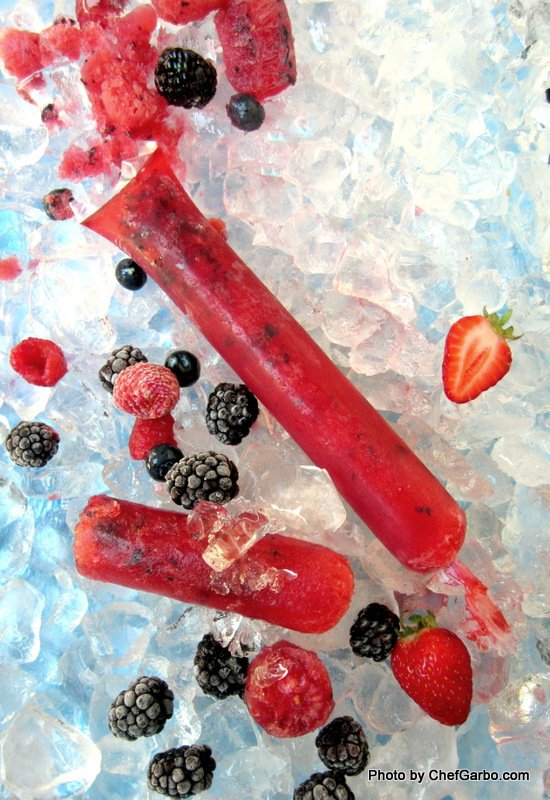
Mixed Berry Ice Pops with Vodka
Recipe for Mixed Berry Vodka Ice Pops
Makes 8 Pops
1 cup raspberries
1/2 cup blueberries
1/2 cup blackberries
juice of 2 lemons
1 cup triple sec
1 cup vodka
2 cups ginger ale
Place the berries in a large bowl and muddle together. Add lemon juice, triple sec, vodka, and mix well. Pour in ginger ale and stir until all the bubbles are gone. Tie the bag closed and freeze at least 8 hours.
San Francisco Area Chef Garbo Wins Food Photo of the Year – July 19, 2014
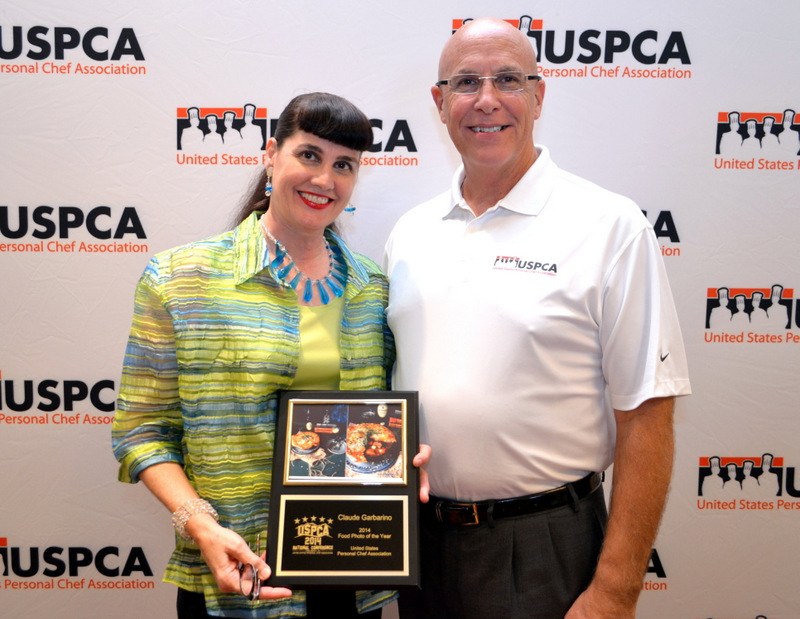
Chef Garbo Wins Photo of the Year Award 2014
Claude “Chef Garbo” Garbarino, owner and operator of Healthy Meals for Busy People, has taken top honors for Food Photo of the Year during the 2014 United States Personal Chef Association National Conference in Long Beach, California.
Jul. 31, 2014 – LONG BEACH, Calif. — Chef Claude Garbarino, a Certified Personal Chef, has been a member of the United States Personal Chef Association since she started Healthy Meals for Busy People in the San Francisco Bay Area in 2004. In addition to her Personal Chef Service, Chef Garbo currently serves as Secretary for the San Francisco Bay Area Chapter of the USPCA.
“Ever since I can remember I’ve been passionate about food and photography,” says Chef Garbo. “The two naturally came together when it was time to market my Personal Chef Service on my website.”
Judges for this inaugural competition consisted of professional members within the United States Personal Chef Association. The award was presented at the USPCA’s National Personal Chef Conference in Long Beach, California, on July 19. The conference drew personal chefs from throughout North America and from as far away as Zimbabwe.
Chef Garbo credits a class she took with 2014 USPCA National Conference keynote speaker Denise Vivaldo as the reason for her quality photos: “After taking Denise Vivaldo’s Master Food Styling Class, my business took off, and my food photos have been selling my service ever since because people eat with their eyes! I am honored to have won the Photo of the Year Award, as it acknowledges that I’m getting it right.”
Drinking Vinegars and Shrubs Hits Mixology – June 25, 2014
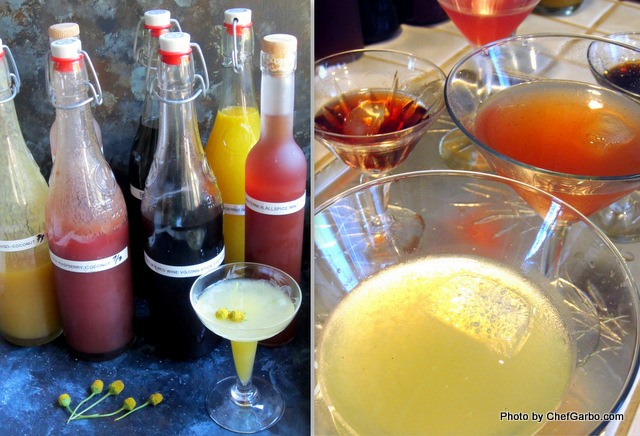
Lime Serrano Shrub
We’re talking shrubs, preserved syrups made with fruits and vinegars, not the kind you find in your garden. Imbibing vinegars may not sound appealing when you desire a summer afternoon refresher but they are making a come back. A shrub is an-old fashioned syrup made by macerating fresh fruit in sugar and vinegar. It’s an extraordinarily fruity, tart and sweet mixture that dates back to Colonial times. Like salting and smoking meat in the pre-refrigeration days, preserving fruit in sugar and vinegar was a problem solving necessity. Put shrubs on your radar as you will likely find an inventive Mixologist at your local tavern offering creative concoctions using these syrups as an alternative to conventional lemons and limes.
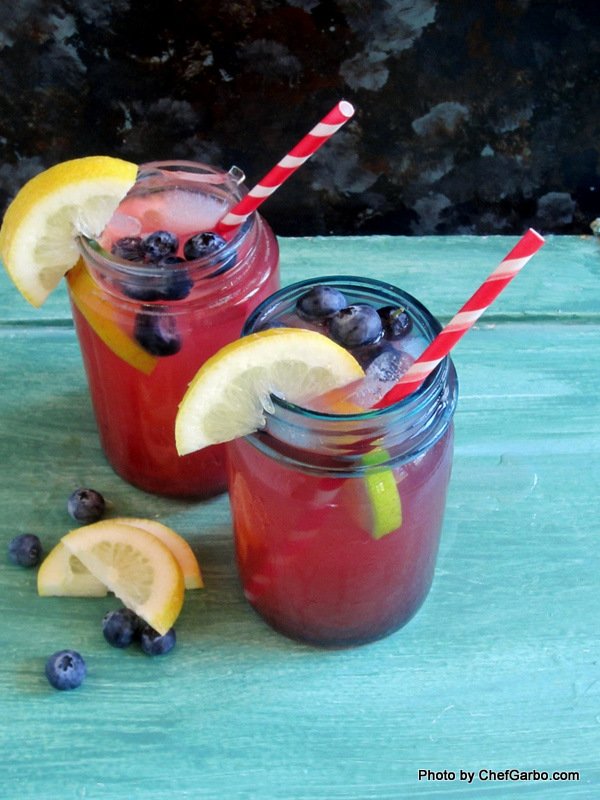
Blueberry, Lemon & Ginger Shrub
Shrub Love – The History of Shrubs
The American version of the shrub originated from 17th century England where they used vinegar as an alternative to citrus juices in the preservation of summer harvested berries and other fruits which was enjoyed during the off-season. By the 19th century, classic American recipes called for drenching their summer bounty of fruits with vinegar which was left to infuse anywhere from overnight up to several days; then they strained the fruit which would be mixed with a sweetener such as sugar or honey and finally reduced to make a syrup. During the hot summer months, the sweet-and-sour mixture would be added to a glass of water or soda water as a thirst quenching soft drink. Often times the fruit syrups were used in alcoholic beverages as well. Shrubs eventually fell out of popularity when the refrigerator was invented. These days, however, serving up vinegar-based shrub drinks has become popular once again as Mixologists seek to reinvent historical tricks of the trade and you can find a slew of shrub recipes which are incredibly easy to make at home.
Shrubs are also excellent used in savory marinades and sauces for meats and they’re great flavor enhancers for icings or poured over ice cream and yogurt!
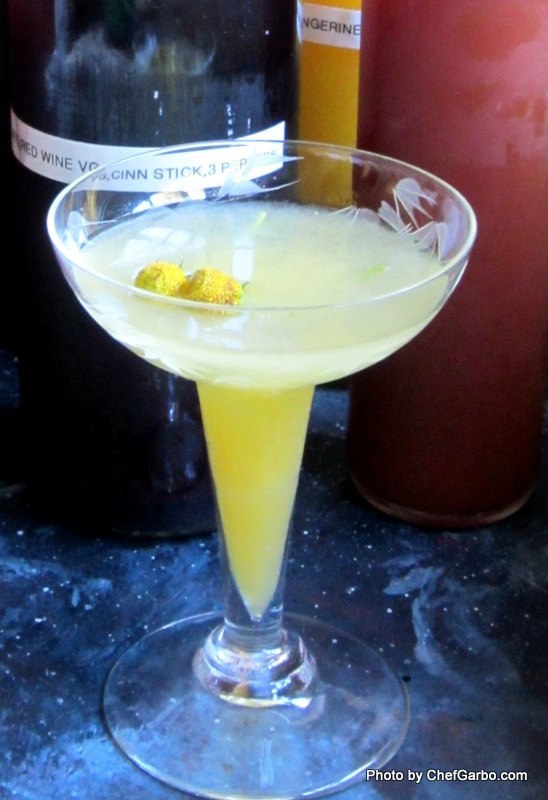
Lime Serrano Shrub
Lime Serrano Shrub (1 bottle)
8 limes zested
4 cups lime juice
4 cups sugar
4 cups white wine vinegar
4 Serrano green chilies, whole, no slit.
To make the Lime Serrano Shrub: (1 bottle)
Zest 8 limes. Juice 4 cups of lime juice. Dissolve 4 cups sugar in lime juice. Add 4 cups white wine vinegar, shake. Add 4 peppers. Let sit for at least 6 hours up to four days after the vinegar has been added and taste for heat. The vinegar will still be strong but you don’t want to leave in the peppers indefinitely. If you want more heat slit the pepper. Decant into a 16 ounce bottle with swing top rubber stopper. Shrubs will keep up to one year in fridge.
Lime Serrano Shrub Cocktail
1 jigger Lime Serrano Shrub
2 jiggers Vodka
1/2 jigger St. Germaine Elderflower Liqueur
1 jigger Lime Juice (fresh)
Pour all of the ingredients into a shaker and fill with ice. Shake and fine strain into a chilled martini glass “straight up” or serve over ice and garnish with lime wedge. You can adjust the sweet:-sour ratio to your liking.
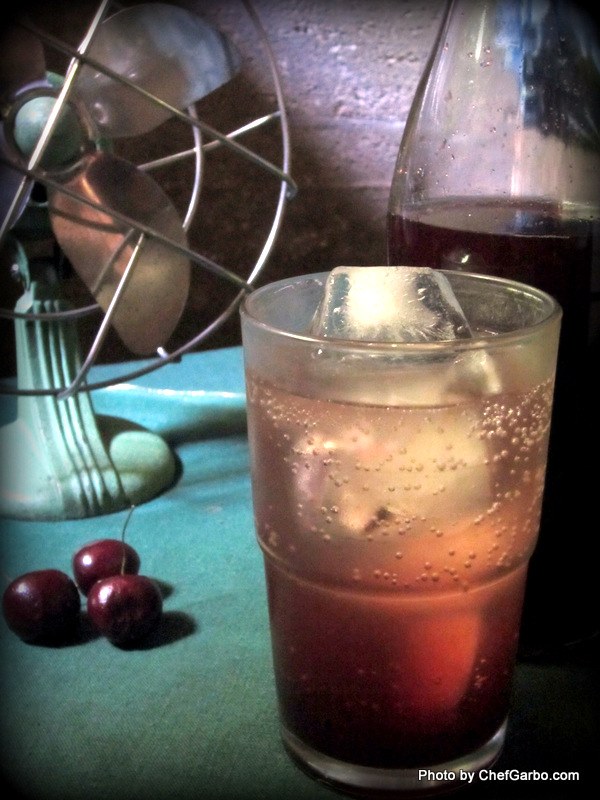
Cherry Shrub with Absinthe
Cherry Shrub with Absinthe
• 1 oz absinthe
• 1 oz cherry shrub
• 1 oz lemon juice
• 2 oz ginger ale
• lemon wedge garnish
Preparation
Combine absinthe, cherry shrub, lemon in a cocktail shaker with 3-4 ice cubes. Shake vigorously for a few seconds, then strain into a tall glass filled with ice. Garnish with a lemon wedge if desired.
To make the cherry shrub:
Chop 2 cups of cherries and place them in a large glass jar. Mix in two cups of cane sugar and let macerate for 2-3 hours at room temperature. Place lid on jar and refrigerate for 7 days shaking the jar once or twice a day to dissolve the sugar. After 7 days strain the fruit mixture thru a fine mesh sieve squeezing the pulp to extract all the juices. Add 1 cup cider vinegar and 1 cup black cherry balsamic vinegar. Decant into a 16 ounce bottle with swing top rubber stopper. Shrubs will keep up to one year in fridge.
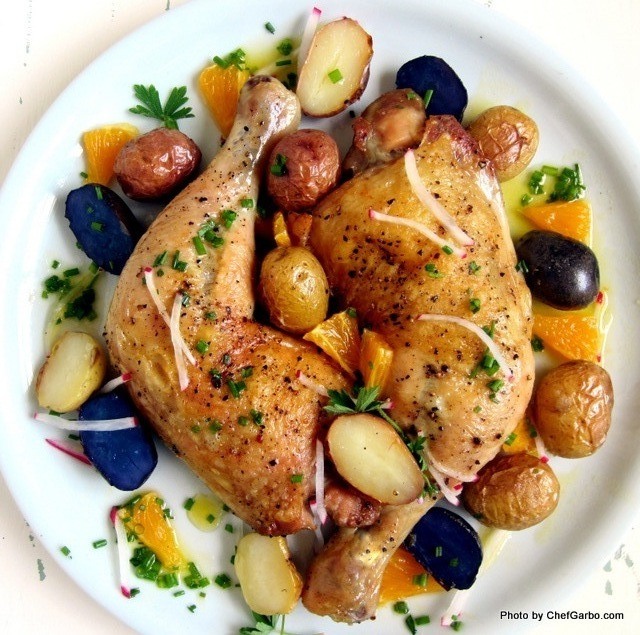
Roast Chicken with Apricot-Citrus Shrub
Roasted Chicken and Apricot-Citrus Shrub Salsa (Adapted from Tyler Florence’s “Fresh” Cookbook)
For the Chicken:
6 whole chicken legs (drumstick & thigh) free-range chicken
1/2 cup smoked olive oil
Kosher salt and freshly cracked black pepper
1 -1/2 pounds baby creamer potatoes in assorted colors
For the Apricot-Citrus Shrub Salsa:
2 limes
3 tablespoons Apricot Shrub
1 navel orange
Extra-virgin olive oil
Kosher salt and freshly cracked black pepper
6 breakfast radishes
3 tablespoons finely chopped fresh chives
Flowering cilantro buds
Fleur de sel
Directions:
Preheat the oven to 375 degrees F. Rub chicken all over with some of the smoked olive oil, ensuring it gets in all the crevices. Season all over with salt and pepper.
For the Chicken: Set the chicken legs in a large roasting pan over two burners and heat over medium-high heat. When the pan is hot, add the chicken legs skin-side down and sear for 4 to 5 minutes. Turn the chicken over, add the potatoes to the pan, and drizzle with more olive oil. Season with salt and pepper. Roast in the oven for 45 minutes, or until an instant-read thermometer inserted in the joint between the thigh and drumstick reads 160 degrees to 165 degrees F. The potatoes should be golden on the outside and tender in the middle. Remove from the oven and allow the chicken to rest for 5 minutes.
For the citrus salsa. Use a sharp knife to cut away the rind and pith from each of the citrus fruits. Holding the fruit over a bowl, carefully cut between the membranes to free the segments. Let the juices and segments fall into the bowl. Add about cup extra-virgin olive oil to the bowl and 3 tablespoons of Apricot Shrub and season with salt and pepper. Cut the radishes into very fine matchsticks on a mandoline or with a sharp knife. Fold them into the citrus salsa, and add the chives. Serve the roasted chicken with the potatoes and citrus salsa, and garnish with flowering cilantro. Season with fleur de sel.
To make the apricot shrub:
Chop 2 cups of apricots and place them in a large glass jar. Mix in two cups of cane sugar and let macerate for 2-3 hours at room temperature. Place lid on jar and refrigerate for 7 days shaking the jar once or twice a day to dissolve the sugar. After 7 days strain the fruit mixture thru a fine mesh sieve squeezing the pulp to extract all the juices. Add 2 cups cider vinegar. Decant into a 16 ounce bottle with swing top rubber stopper. Shrubs will keep up to one year in fridge.
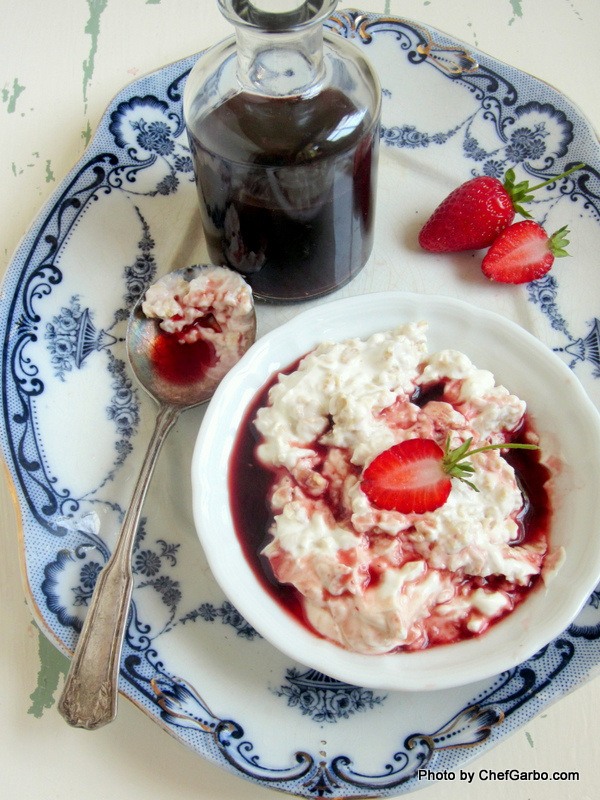
Strawberry Shrub Drizzle with Oatmeal Vanilla Yogurt
To make the strawberry shrub:
Chop 2 cups of strawberries and place them in a large glass jar. Add two cups of cane sugar and let macerate for 2-3 hours at room temperature. Place lid on jar and refrigerate for 7 days shaking the jar once or twice a day to dissolve the sugar. After 7 days strain the fruit mixture thru a fine mesh sieve squeezing the pulp to extract all the juices. Add 1 cup cider vinegar and 1 cup Champagne vinegar. Decant in to 16 ounce bottle with swing top rubber stopper. Shrubs will keep up to one year in fridge.
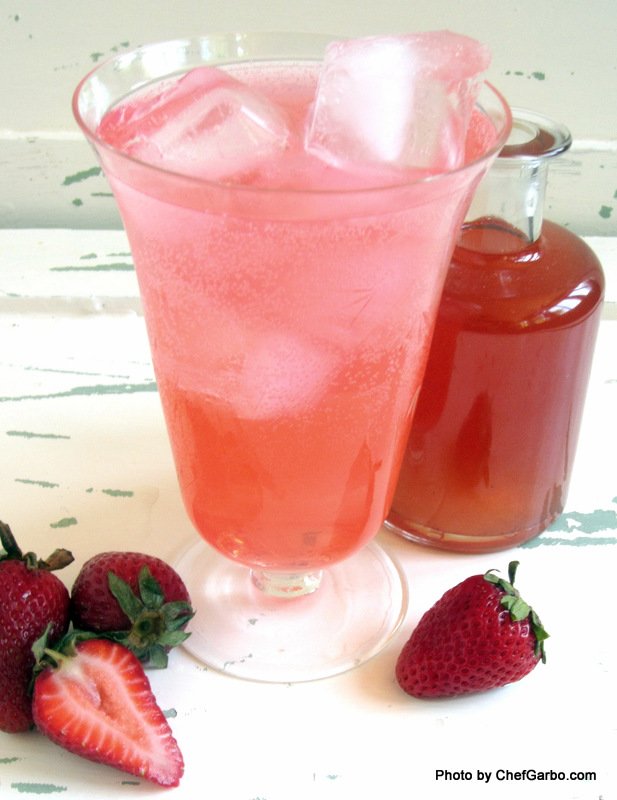
Strawberry Shrub
STRAWBERRY CHERUB’S CUP
1 part St-Germain
2 parts Vodka, Cirtus Vodka, or Hendricks
1 part lemon juice
1 part strawberry shrub
top with Brut Rosé Sparkling Wine
Shake and strain over fresh ice in a Collins glass. Top with Brut Rosé or Brut Champagne. Garnish with strawberry.
Easter and the Tradition of Easter Egg Decorations – April 20, 2014
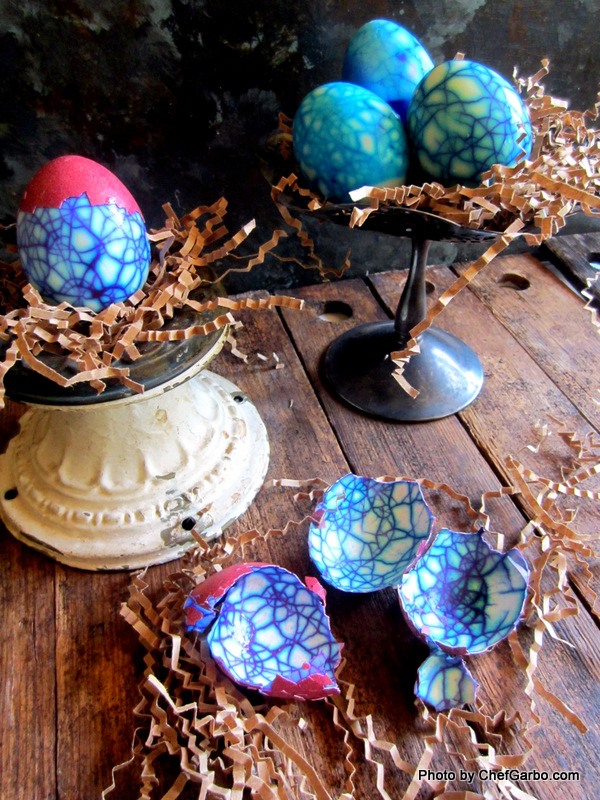
Easter Eggs – Gluten Free
The incredible edible egg has been the symbol of fertility and rebirth for centuries. In fact, the art of decorating eggs goes back to the ancient Greeks, Egyptians, Romans, and Persians as they enthusiastically celebrated the coming of Spring. Today, the skill of decorating eggs comes in many different art forms, the most famous being the expensive Faberge eggs and the techniques used by the early American Pennsylvania Dutch settlers, who are credited with bringing the craft of dying Easter eggs to America.
And techniques I give you… For some really fun Easter egg decorating ideas click here.
Deviled Easter Egg Recipe
So what do you do with all those beautiful Easter eggs? You make Deviled Eggs of course! Check out the below recipe which features wild Ramps from my garden!
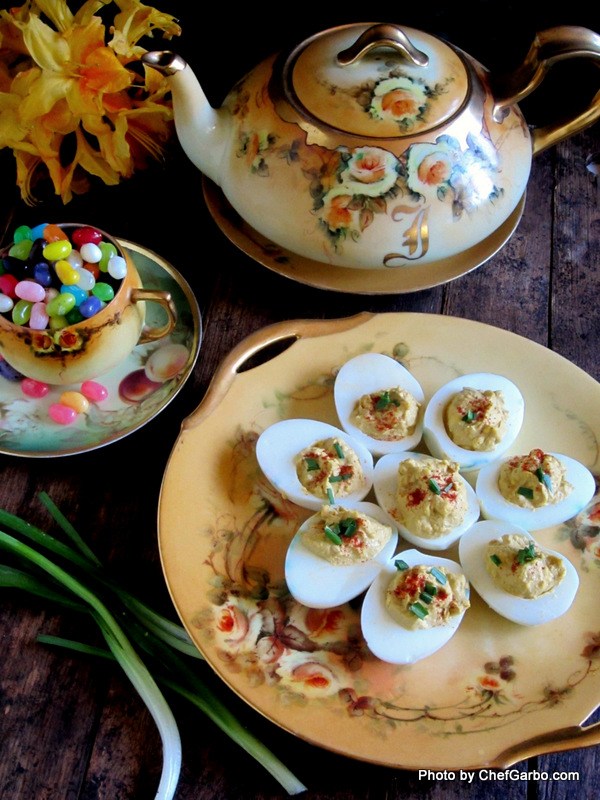
Deviled Easter Eggs – Gluten Free
Ingredients
* 8 hard boiled eggs
* 4 tbsp mayonnaise
* 2-4 tsp Dijon mustard, to taste
* 2 tsp white vinegar
* 2 tsp minced shallots
* ¼-1/2 tsp salt
* ¼ tsp Worcestershire sauce
* ¼ tsp ground black pepper
* pinch of curry powder
* 6 drops hot red pepper sauce
* paprika for garnish
* ramps or chives for garish
Instructions
Hard boil your eggs for 15 minutes, then plunge in cold water and let them cool completely. You could even boil them the day before you want to make your deviled eggs. Once the eggs are completely cooled, shell them, then cut them in half lengthwise and leave the whites intact. Carefully remove the yolks, and place them in a bowl.
In the bowl, mash the yolks with the mayonnaise, mustard, vinegar, shallots, salt, Worcestershire sauce, pepper, curry powder and hot sauce.
Spoon or pipe the egg yolk mixture into the indent of the egg whites, mounding the mixture slightly. If you wish to pipe the mixture in, use a star tip on a pastry tube.
Garnish with a sprinkle of paprika, and a couple of cut ramps or chives. Refrigerate until you are ready to serve.
St. Paddy’s Day and My Irish Temper – March 17, 2014
I’m Irish. Black Irish with some Italian too… Probably have more Irish blood in me though. My mother’s folks were Irish as was my Dad’s mother. The signature trait that runs in my family is the infamous Irish temper. Thank goodness my mother’s temper was short-lived. Like a flame, she would have a spectacular outburst of anger, and then it would burn out quickly as if nothing had ever happened. Most of the time she was a hoot and I miss her.
It’s been said that all Celtic people have fiery natures and in ancient times the warriors constantly fought over bulls and beautiful women. It takes a lot to make me angry. And when I’m pushed to the edge I’m like a bull, but my fury is silent, and is manifested with a tell-tail runny nose. If you ever see that…Run for the hills!
Want to know what really makes me mad? A published recipe that hasn’t been tested. You see it all time on the web, lots of beautiful looking recipes, but the end result is a lot of muss and fuss for a less than excellent dish. Well I’m happy to tell you that the below Beef and Guinness pie recipe has been tested by yours truly and it’s wonderful.
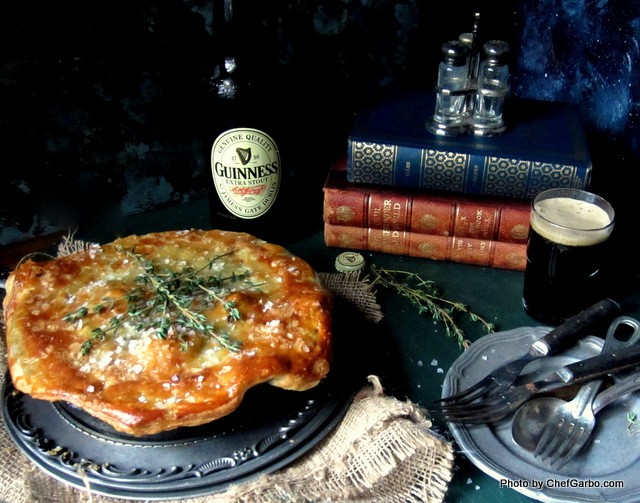
Beef and Guinness Pie
Beef and Guinness Pie
Ingredients
2 pounds beef chuck (after fat is trimmed, cut into bite-size chunks)
2 tablespoons olive oil, plus more as needed
1 medium onion, diced (about 1 1/2 cups)
4 cloves garlic, crushed
2 medium carrots, diced
2 stalks celery, diced
1 1/2 cups homemade beef stock or store-bought beef broth
3 cups (24 ounces) Guinness
1 14-ounce can diced tomatoes, drained
3 tablespoons Worcestershire sauce
3 tablespoons A.1. Steak Sauce
Small handful each fresh rosemary, thyme, and flat-leaf parsley, finely chopped
2 tablespoons of flour combined with 2 tablespoons of soft butter (thickener)
Sea salt and freshly ground black pepper, to taste
1 sheet good-quality puff pastry (preferably Dufour brand)
1 large egg yolk mixed with a little milk
1 dash sea salt crystals for dusting crust (optional)
Directions
Toss the meat lightly with salt and pepper to coat. Heat 1 tablespoon olive oil in a large, heavy-bottomed saucepan or Dutch oven over medium heat. Working in batches, lightly brown/sear the meat on all sides, adding more oil to the pan as needed. Repeat until all meat is seared and remove beef to a bowl. Add the remaining tablespoon oil to the pan, along with the onion and garlic, and cook over medium heat until softened, 3 to 4 minutes. Add the carrot and celery, reduce the heat to medium-low, and cook for 5 to 6 minutes. Return the meat to the pan, then add the stock or broth, Guinness, canned tomatoes, Worcestershire sauce, steak sauce, and chopped herbs and stir, using a wooden spoon to scrape any bits stuck to the bottom of the pan. Taste for salt and pepper balance, then bring to a boil. Reduce the heat to low and gently simmer, uncovered, until the meat is tender and the sauce has thickened, stirring occasionally and skimming any fat from the surface, 1 1/2 to 2 1/2 hours. To thicken the stew combine 2 tablespoons of soft butter with 2 tablespoons of flour and add to stew. Bring to boil until thickened to your liking. Spoon the stew into a 7-inch-diameter ovenproof pot. Let cool completely. Preheat the oven to 400°F. Brush the outside edge of the pot or dish with water, then gently place the sheet of pastry over the stew, pinching the pastry against the edge of the pot or pie dish to seal. (lf you like, you can crimp the pastry to form a decorative edge.) Brush the pastry generously with the egg wash, dust with sea salt crystals if desired and bake for 30 to 40 minutes, until the pastry is risen and golden brown. Serve piping hot.
San Francisco Personal Chef Garbo – Published Article in Personal Chef Magazine – Fall Issue 2013
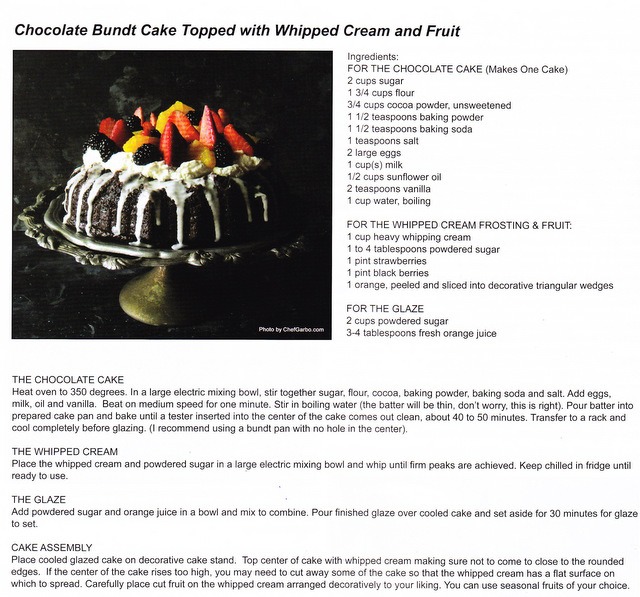
Garbo’s Featured Article in Personal Chef Magazine – Fall Issue 2013- Chocolate Bundt Cake – Gluten Free
Holiday Desserts That Warm Our Hearts
Imagine with your eyes closed; all the sights, sounds and aromas that are hallmarks of the Holiday Season. Was one of the first things that came to mind a beautiful dessert of some sort? Was the kitchen filled with the prattle of kids making sugar cookies reaching for the colorful sugar sprinkles? Did you attend a potluck dinner, with its high dessert ratio, or a pumpkin carving party rich with the smell of pumpkin and apple pies? Desserts are often the centerpiece at Holiday celebrations and for good reason; this is the time of year where we can indulge in lavish and sinfully rich treats. We spend a lot of time in the kitchen during the Holidays and baking is often the main event as it warms our hearts and encourages the spirit of sharing and celebration. It’s a perfect opportunity to express the festive extravagance that marks the season. The dessert recipes I’ve chosen meet the requirements for Holiday hospitality as they are both pretty and delicious.
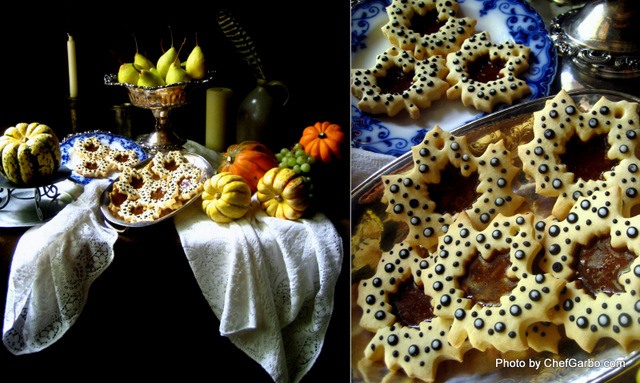
Fall Harvest Cookies -Gluten Free
San Francisco Personal Chef Garbo – Published Article in Personal Chef Magazine – Fall Issue 2013
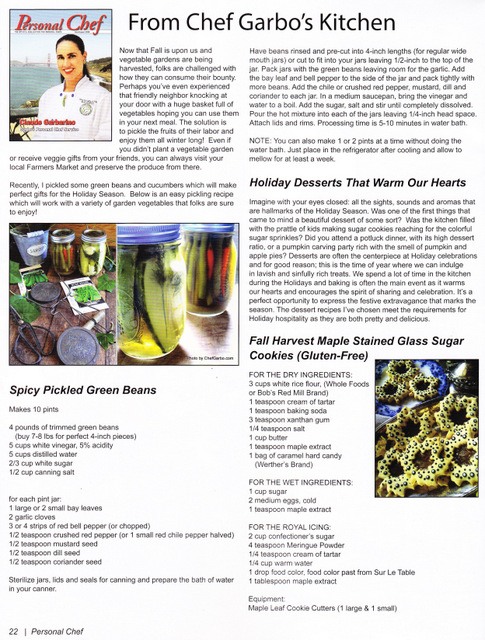
Garbo’s Featured Article in Personal Chef Magazine – Fall Issue 2013
Fall Harvest & Pickled Holiday Gifts
Now that the Fall Season is waning and vegetable gardens have been harvested, folks are challenged with how they can consume their bounty. Perhaps you’ve experienced that friendly neighbor knocking at your door with a huge basket full of home grown vegetables hoping you can use them in your next meal. The solution is to pickle the fruits of their labor and enjoy them all winter long! Even if you didn’t plant a vegetable garden or receive veggie gifts from your friends, you can always visit your local Farmer’s Market and preserve the produce from there.
Recently, I pickled some green beans and peppers which will make perfect gifts for the Holiday Season. Below is an easy pickling recipe which will work with a variety of garden vegetables that folks are sure to enjoy!
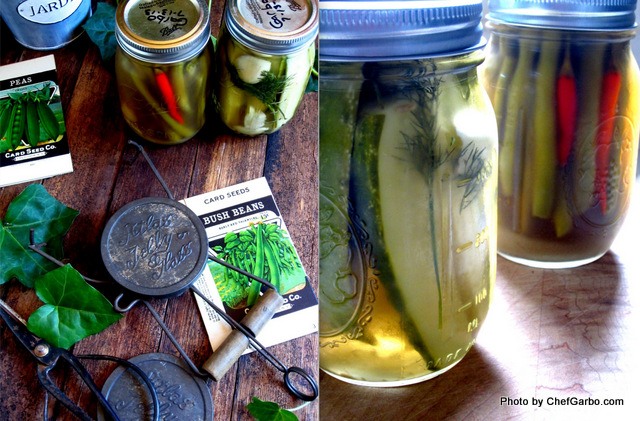
Pickled Green Beans – Organic – Gluten Free
Spicy Pickled Green Beans
Makes 10 pints
4 pounds of trimmed green beans (buy 7-8 lbs for perfect 4-inch pieces)
5 cups white vinegar, 5% acidity
5 cups distilled water
2/3 cup white sugar
1/2 cup canning salt
for each pint jar:
1 large or 2 small bay leaves
2 garlic cloves
3 or 4 strips of red bell pepper (or chopped)
1/2 teaspoon crushed red pepper (or 1 small red chile pepper halved)
1/2 teaspoon mustard seed
1/2 teaspoon dill seed
1/2 teaspoon coriander seed
Sterilize jars, lids and seals for canning and prepare the bath of water in your canner.
Have beans rinsed and pre-cut into 4-inch lengths (for regular wide mouth jars) or cut to fit into your jars leaving 1/2-inch to the top of the jar. Pack jars with the green beans leaving room for the garlic. Add the bay leaf and bell pepper to the side of the jar and pack tightly with more beans. Add the chile or crushed red pepper, mustard, dill and coriander to each jar. In a medium saucepan, bring the vinegar and water to a boil. Add the sugar, salt and stir until completely dissolved. Pour the hot mixture into each of the jars leaving 1/4-inch head space. Attach lids and rims. Processing time is 5-10 minutes in water bath.
NOTE: you can also make 1 or 2 pints at a time without doing the water bath. Just place in the refrigerator after cooling and allow to mellow for at least a week.
San Francisco Personal Chef Garbo – Published Article in Personal Chef Magazine – Spring Issue 2013
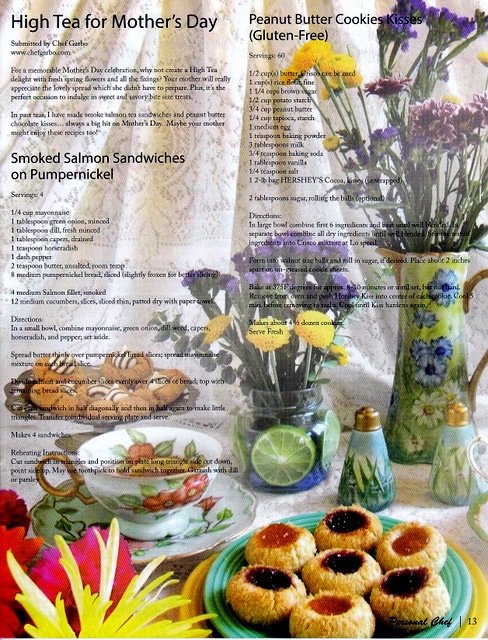
Garbo’s Featured Article in Personal Chef Magazine – Spring Issue 2013
High Tea for Mother’s Day
For a memorable Mother’s Day celebration why not create a High Tea delight with fresh spring flowers and all the fixings. Your mother will really appreciate the lovely spread which she didn’t have to prepare. Plus, it’s the perfect occasion to indulge in sweet and savory bite size treats.
In past teas, I have made smoked salmon tea sandwiches and peanut butter chocolate kisses… always a big hit on Mother’s Day. Maybe your mother might enjoy these recipes too!
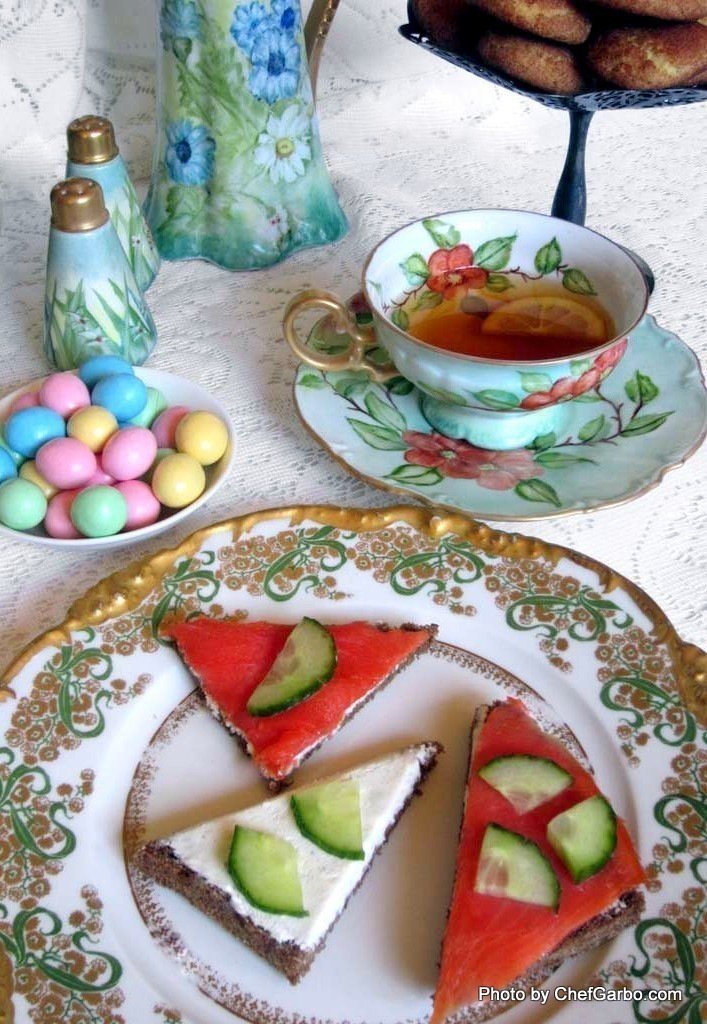
Smoked Salmon Tea Sandwiches
Smoked Salmon Sandwiches on Pumpernickel
Servings: 4
1/4 cup(s) mayonnaise
1 tablespoon(s) green onion, minced
1 tablespoon(s) dill, fresh minced
1 tablespoon(s) capers, drained
1 teaspoon(s) horseradish
1 dash(es) pepper
2 teaspoon(s) butter, unsalted, room temp
8 medium pumpernickel bread, sliced (slightly frozen for better slicing)
4 medium Salmon fillet, smoked
12 medium cucumbers, slices, sliced thin, patted dry with paper towel.
Directions:
In a small bowl, combine mayonnaise, green onion, dill weed, capers, horseradish, and pepper; set aside.
Spread butter thinly over pumpernickel bread slices; spread mayonnaise mixture on each bread slice. Divide salmon and cucumber slices evenly over 4 slices of bread; top with remaining bread slices. Cut each sandwich in half diagonally and then in half again to make little triangles. Transfer to individual serving plate and serve.
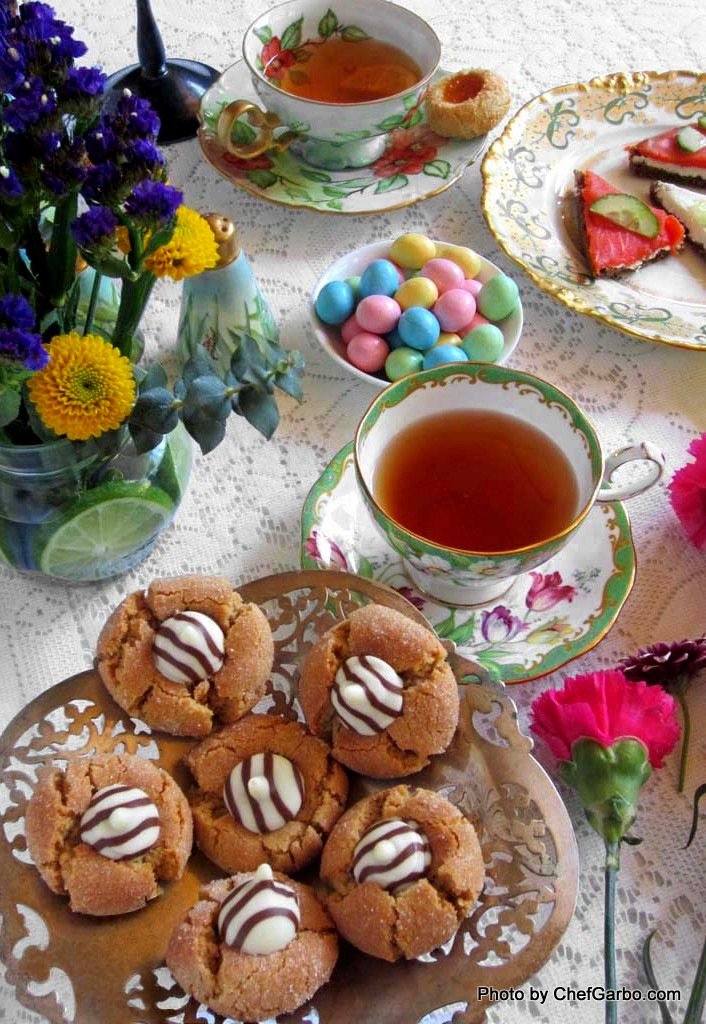
Peanut Butter Chocolate Kisses
Chocolate Peanut Butter Kisses (Gluten-Free)
Servings: 30
1/2 cup(s) butter
1 cup(s) rice flour, fine
1 1/4 cup(s) brown sugar
1/2 cup(s) potato starch
3/4 cup(s) peanut butter
1/4 cup(s) tapioca, starch
1 medium egg
1 teaspoon(s) baking powder
3 tablespoon(s) milk
3/4 teaspoon(s) baking soda
1 tablespoon(s) vanilla
1/4 teaspoon(s) salt
1 medium bag of HERSHEY’S Cocoa, kisses unwrapped
2 tablespoon(s) sugar, rolling the balls (optional)
Directions:
In large mixing bowl combine first 6 ingredients and beat until well blended. In separate bowl combine all dry ingredients until well blended. Stir the rest of ingredients into butter mixture at Lo speed. Form into walnut size balls and roll in sugar, if desired. Place about 2 inches apart on un-greased cookie sheets. Bake at 375F degrees for approx. 8-10 minutes or until set, but not hard. Remove from oven and push Hershey Kiss into center of each cookie. Cool 5 min. before removing to racks. Cool until Kiss hardens again. Makes about 4 ½ dozen cookies.
San Francisco Personal Chef Garbo Hosts 3rd Annual USPCA Local Bay Area Chapter Meeting – Inverness, CA – September 18, 2012
The 3rd Annual Bay Area UPSCA Chapter Retreat took place at Inverness, CA in the beautiful Point Reyes National Seashore. The purpose of the Chapter Retreats are to experience culinary field trips to several famous Point Reyes food purveyors, strengthen our bonds as a Chapter, and to develop our food styling skills which ultimately promote our Personal Chef services. Most importantly, we want to have fun while we showcasing our talents as Personal Chefs.
NICK’S COVE HISTORY
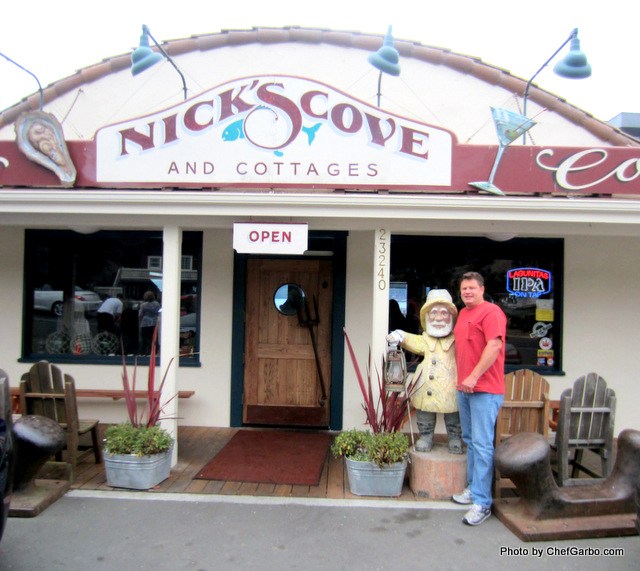
Nick’s Cove
The first stop was Nick’s Cove. one of the last remaining historic settlements catering to the early California tourist trade on the beautiful Tomales Bay coastland. It’s served as a depot for tourism, local fishermen and agricultural operations throughout its history. During the 1930’s the cabins on the water’s edge were rented to people from the San Francisco Bay area, Sacramento Valley and beyond. Tomales Bay was a favorite spot for weekend fishermen and hunters, and the Kojich family owners catered to those seasonal attractions. The Kojich family remained at Nick’s Cove until their eventual retirement. The current owners of Nick’s Cove have taken special care to maintain the integrity of its traditional architecture in recognition of the cottages’ historical importance. Nick’s Cove restaurant features local seafood including the famous Hog Island Oysters, Dugeness Crab Cakes, Clam Chowder and much more.
COWGIRL CREAMERY AND POINT REYES BLUE CHEESE FARMSTEAD
The Giacomini commitment to producing superior quality, farmstead dairy products began over 100 years ago in the mountains of Italy. Today Bob Giacomini and his family continue the family tradition with their Point Reyes Original Blue™. Cowgirl Creamery crafts their own cheeses using Organic milk from the neighboring Straus Family Creamery. Mt. Tam, a triple-cream similar to Explorateur, and Red Hawk, a triple-cream, washed rind, unctuous cheese, are the more well known of their aged cheeses, but the company also makes Pierce Point, St. Pat, and Devil’s Gulch on a seasonal basis. Only two of their aged cheeses are in a slightly different format.

Cow Girl Creamery – Point Reyes, CA
FOOD STYLING AND TEAM BUILDING
When we arrived at Garbo’s cottage, everyone executed their mise-en-place. Garbo prepared the photo shoot area and lighting and everyone brought their favorit plate and props to feature their dish. Below is a photo essay of what everyone prepared for dinner and brunch:
Chef Garbo: Cucumber Mint Martini with Vodka, Elderflower, Ginger Beer & Lime w/Nuts and Baked Eggs with Bacon, Basil, Tomatoes, Goat Cheese and Cream
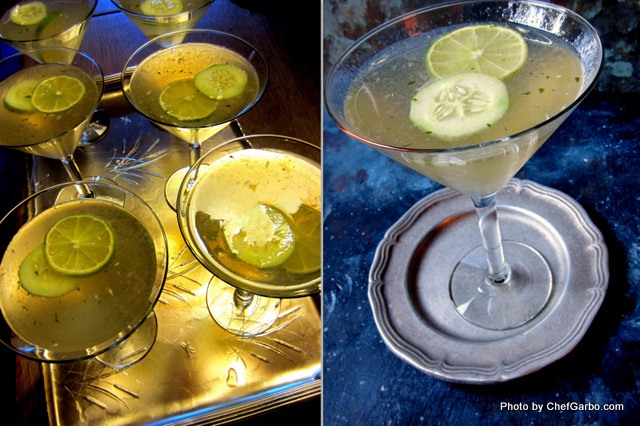
Cucumber Mint Cocktail with Elderflower, Vodka & Ginger Beer
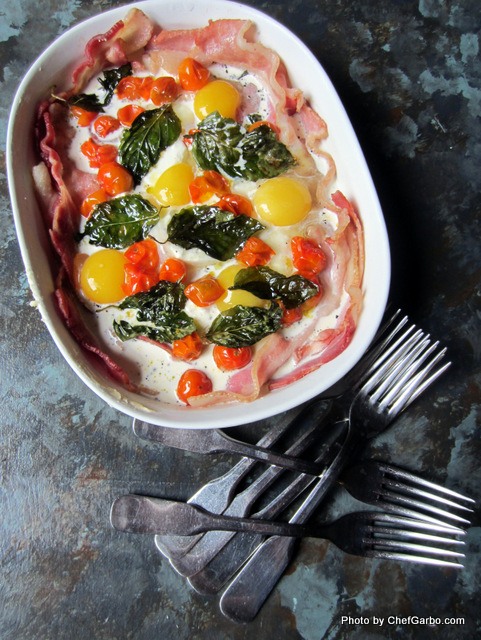
Chef Garbo’s Baked Eggs with Goat Cheese
Chef Kara Lee: NY Prime Rib Steaks with Carmalzied French Onion Dip with Kettle Chips
Chef Shoshana: Warm Spinach Salad with Blue cheese, Beets and Nuts
Chef Dawn: Baked Risotto with Sausage and Artichokes Mixed Berries with Granola and Yogurt
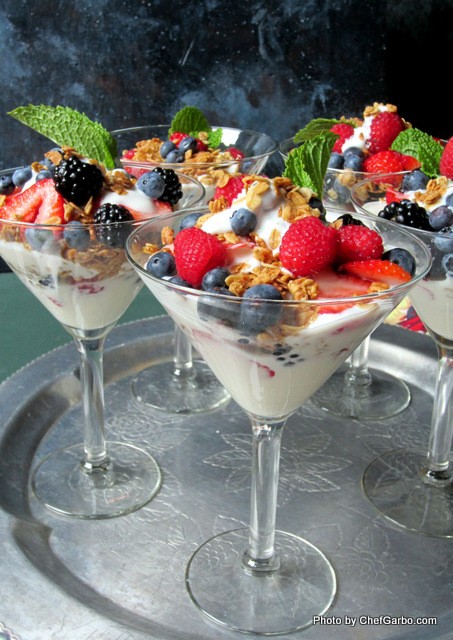
Chef Dawn’s Fruit Cocktail Trifles
Chef Bourget: Fish Soup and Apple Crisp
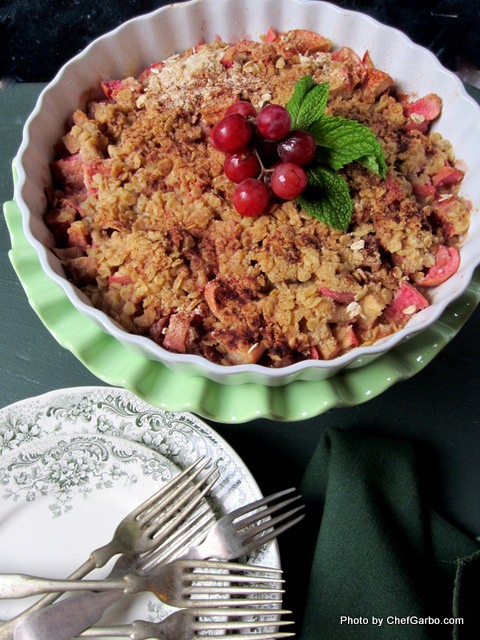
Chef Bourget’s Bosc Pear Apple Crisp
Chef Greg: Stuffed Mushrooms and Grilled Shrimp Skewers with Pineapple
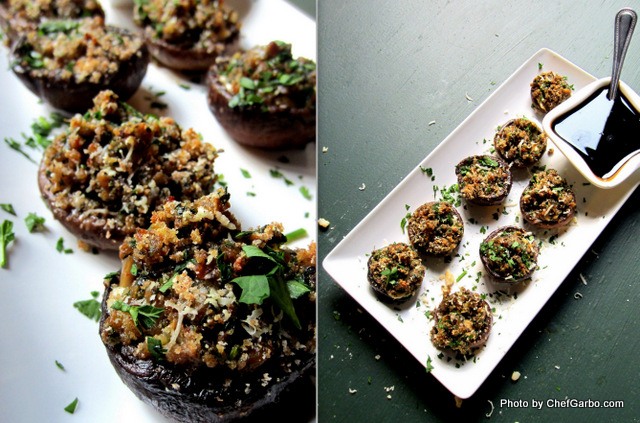
Chef Garg’s Stuffed Mushrooms
MARKETING CHAPTER WEBSITE WITH OUR BLOG
Dinner was a knockout performance which everyone thoroughly enjoyed. The main dinner table discussion revolved around how to exploit our newly developed Chapter Website. Garbo announced that the site was officially up and running thanks to Polina’s stellar programming skills. Essentially, Garbo created the content and design and Polina managed of all the back-end programming work. The Chapter decided upon the WordPress blogging platform because it’s easy to use, cost-effective and has built in Search Engine Optimization (SEO). Garbo stressed that everyone in the Chapter should blog away under our Blog Tab to promote their businesses and get more visibility on the web via our site. The best part is that the Chapter is appearing in the #1 spot on a Bing & Yahoo Search Result when the key words: “Bay Area Personal Chef” are typed which is a very popular search string. Our strategy is to maintain this #1 spot by continuing to add blogging content to our Chapter website. It will take longer to appear on the 1st page of a Google search due to their different algorithms but we will succeed in time! Check out our site at http://bayareauspca.com/site
San Francisco Personal Chef Garbo Featured in Gourmet Magazine Food Photography & Food Styling 2/20/12
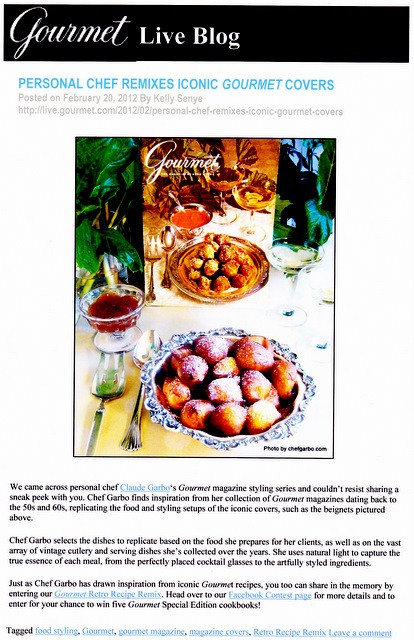
Garbo’s Food Photography & Styling Featured in Gourmet Live Blog
GOURMET LIVE BLOG PERSONAL CHEF REMIXES ICONIC GOURMET COVERS
POSTED ON FEBRUARY 20, 2012 BY KELLY SENYEI
We came across personal chef Claude Garbo‘s Gourmet magazine styling series and couldn’t resist sharing a sneak peek with you. Chef Garbo finds inspiration from her collection of Gourmet magazines dating back to the 50s and 60s, replicating the food and styling setups of the iconic covers, such as the beignets pictured above.
Chef Garbo selects the dishes to replicate based on the food she prepares for her clients, as well as on the vast array of vintage cutlery and serving dishes she’s collected over the years. She uses natural light to capture the true essence of each meal, from the perfectly placed cocktail glasses to the artfully styled ingredients.
Just as Chef Garbo has drawn inspiration from iconic Gourmet recipes, you too can share in the memory by entering our Gourmet Retro Recipe Remix. Head over to our Facebook Contest page for more details and to enter for your chance to win five Gourmet Special Edition cookbooks!
7 RESPONSES TO PERSONAL CHEF REMIXES ICONIC GOURMET COVERS
Paula K.
February 22, 2012 at 5:18 am
To see a vintage Gourmet cover brings back warm memories of reading these magnificent magazines. How refreshing to see a new take on an old cover, but with the same eye for quality and style. Great work Chef Garbo!
Renee Coker
February 22, 2012 at 3:44 pm
I love Chef Garbo’s photography – beautiful vintage foodscapes. She has other Gourmet Magazine shots that are terrific as well. Her website features a Dutch Masters look that is very evocative of the time and sumptuous. Really fun! Bravo Chef Garbo.
Lloyd Foster
February 25, 2012 at 4:18 am
If you seek to complete your collection of this wonderful publication or give an anniversary or birthyear gift, a friend and have completed our collections of Gourmet and amassed many duplictes in the process. We have many annual volumes bound by the publisher and complete with annual index along with many years in the meatl spine binders form Gourmet and loose issues dating back to the early forties.
If interested, contact lfoster@classicwineimports.com
Emily
February 28, 2012 at 2:03 pm
LOL, I’m in the midst of a very similar project, albeit not as, well, gourmet.
I’m cooking all of the dinners from the 1972 recipe card series Dinner is Served! and then photographing them.
http://www.yinzerella.wordpress.com
margaret robertson
March 1, 2012 at 10:24 pm
I just wish Gourmet was still publishing. There is no magazine today that comes close to the quality of the Gourmet magazine before the editorial change. I miss it every time I cook. Not having such great stories and photos makes cooking far less inspirational. I cook a lot, an average of 60 minutes each dinner and often more for special dishes. Gourmet was a constant companion , and unlike other magazines , I never made a recipe that didn’t turn out beautifully the first time. I really miss it as does my daughter, who at 22 cooks often from my old Gourmets and made her first real recipe attempt after the sight of the flourless chocolate cake with raspberries cover. She was 6 and after having help getting out the ingredients , made it herself, as a surprise for us, in the kitchen of an adult friend of hers. The friend was astonished as were we, and our daughter was so happy and proud. It looked just like the cover and tasted astonishing.
vdell
March 2, 2012 at 2:11 pm
How sad that we no longer have Gourmet Magazine. I read it since my Dad subscribed in the early 1950s until it ceased pubication. The internet version is no substitute for sitting down with a cup of tea to read about travels, foods, and above all, recipes that were dependably good.
psutcliffe
March 3, 2012 at 5:44 pm
I couldn’t agree more with the prior posts: Gourmet Magazine… there is no substitute
On a number of levels:
– recipes from the deep dives into master preparations to the quick meals always offered a range of opportunities
– photography and styling were beautiful and inspiring
– travelogues took you there with detailed account of the minutiae that make those experiences come alive
– trends, restaurants, gadgets, techniques, drinks/wine, etc. were well presented
Will give credit where credit is due, Bon Appetit, has improved but I doubt it will ever reach the pinnacle that Gourmet held for decades. It is sorely missed and despite efforts by Conde Nast to keep it alive online and through special releases, they would be well served to bring the publication back to its full format. I would pay double the subscription and sure many others would as well.
San Francisco Personal Chef in the News – December 2011
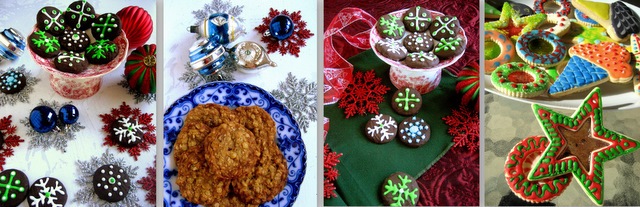
Origins of the Christmas Cookie
Christmas Cookies today have historical roots based on biscuit recipes from Medieval Europe which contained ingredients such as ginger, black pepper, almonds, cinnamon and dried fruit. During the 16th century, Christmas biscuits grew in popularity across Europe which included lebkuchen (a traditional German baked Christmas treat that resembled gingerbread), the papparkakor (a ginger snap) which was popular in Sweden and in Norway it was the krumkake (thin cylindrical lemon and cardamom scented waffle cookies) that were all made at Christmas time.

Christmas Oatmeal Cookie
Between 1871 and 1906, the Dutch and German settlers in America introduced an array of cookie cutters, decorative molds, and festive holiday decorations as a result of changes to the import laws and this brought a vast amount of inexpensive goods to our Christmas markets. “Unlike homemade counterparts, or local tinsmith’s wares, these tools depicted highly stylized images, often drawn from secular themes or…with subjects designed specifically to hang on the Christmas tree. Likewise, recipes appeared in popular cookbooks to better match the demands of such utensils…In a sense, with the advent of inexpensive tin cutters, new emphasis was placed on shape, where in the past, many homemade cookies simply had been square or round. Bells, Christmas trees, camels, crimped wares (cutters with zigzag edges), lilies, Santa Clauses, turkeys, all of these elaborate shapes tended to deemphasize texture and flavor.”
—The Christmas Cook: Three Centuries of American Yuletide Sweets, William Woys Weaver [Harper Perennial:New York] 1990 (p. 106)
In the United States, the tradition where children leave cookies and milk out for Santa on Christmas Eve dates back to the 1930s. The cookies were often cut into Holiday shapes like candy canes, stars, snowflakes, gingerbread man, and Christmas trees.
Short Cut Cookie Decorations
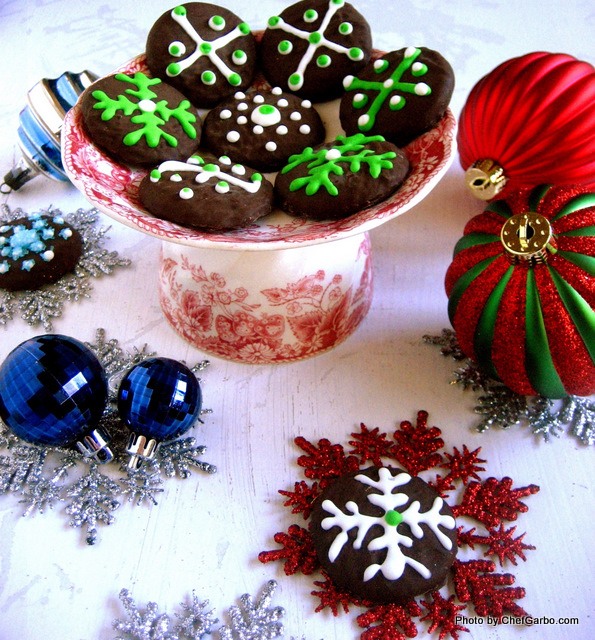
Christmas Oreo Cookies
If you find you’re pressed for time then you might try the baker’s short cut by decorating chocolate frosted Oreo cookies as pictured in the above photo. It takes very little time and the kids will love it! All you need is a frosting bottle which you can get at your local store and a package of dark or white chocolate frosted Oreo cookies and you’re ready to go!
Make your Holidays more festive with colorful hand decorated Christmas cookies!
Garbo’s Thanksgiving Feast with a Renaissance Flair – November 2011
History of Thanksgiving Foods and its Influence on Renaissance Europe
Much of the food from the early Renaissance period was left over from the Middle Ages until Christopher Columbus discovered the Americas in 1492. Soon, trade brought in new and rare delectables into the Renaissance kitchens like oranges, corn, sugar and chocolate that started with the nobility and trickled down to the farmers and peasants. It took considerable time for these victuals to catch on in Europe, but one exception was the Turkey. About 30 years after Columbus, Cortez discovered the American turkey in Mexico around the 1520s. At that time, Turkey was known as “Indian Chicken” and this bird gained popularity very quickly. In addition to being delicious, turkey made a flamboyant centerpiece for banquets when dressed in all its feathers and plumes.
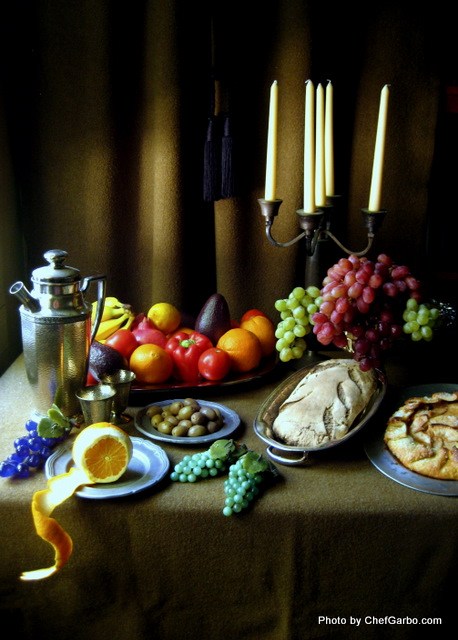
Fruit and Pastries
In 1549, Catherine de Medici hosted a feast that featured 70 “Indian Chickens” on the menu. Other notable fowl served up during the Renaissance period included peacocks, swans and cranes. Smaller game bird might have been pheasant and herons which were typical menu fare as well. It was a common custom to serve pork alongside fried chestnuts where were abundant and easy to cultivate and store. Fruit was always a celebrated Renaissance food and was served as a last course. We would call this “dessert” today.

Fall Harvest & Maple Leaf Stained Glass Sugar Cookies
Garbo’s Thanksgiving Feast with a Renaissance Flair
Instead of the traditional Thanksgiving turkey, I will prepare several Cornish game hens with all the fixings from the Renaissance period like meat pies, fruits and pastries. Click here for two recipes from my “test kitchen” that showcase what I plan to serve at my Thanksgiving feast this year.
May you eat, drink and be merry at your Thanksgiving feast too!
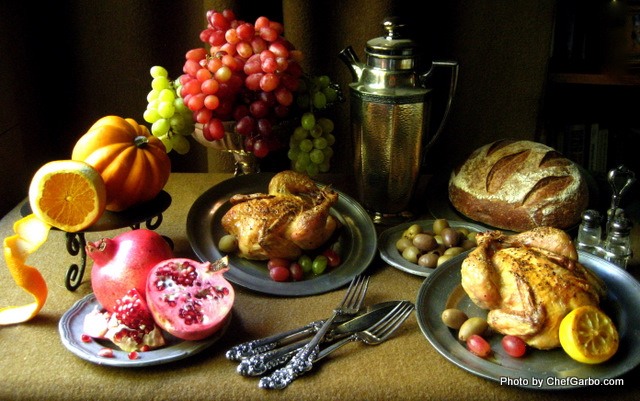
Feast of Cornish Game Hens
Orange Roasted Cornish Game Hens
Servings: 6
2 medium Cornish game hens, whole hen
4 tablespoons Extra Virgin Olive Oil, to rub on hens
1/4 cup orange juice, fresh squeezed (about 1/4 to 1/2 cup)
1 tablespoon orange zest or more to your liking
1 teaspoon salt
1 teaspoon black pepper
1 teaspoon ginger, ground
1/4 cup honey
Preheat oven to 400 degrees.
Clean and dry the game hens and place on roasting rack or baking sheet. Wash and zest both oranges. Take one orange and cut into quarters and place the slices in the cavity of each hen. Rub each hen with 1-2 tablespoons of olive oil and season generously with fresh ground salt and pepper. (I prefer the S&P grinders from Trader Joe’s which are a course grind) Juice the remaining orange and mix 1/4 to 1/2 cup of orange juice with the honey, orange zest and ginger so that it’s a thick syrupy mixture. Add more orange juice or honey to achieve the proper thickness and set aside. Roast hens for 45 minutes. Remove from oven and use a basting brush to smear the orange honey mixture over the hens every 5 minutes for the last 15 minutes. Baste with pan juices as well so that the hens have nice dark golden skins. Remove from oven and let rest for 5-10 minutes and serve with your favorite sides.
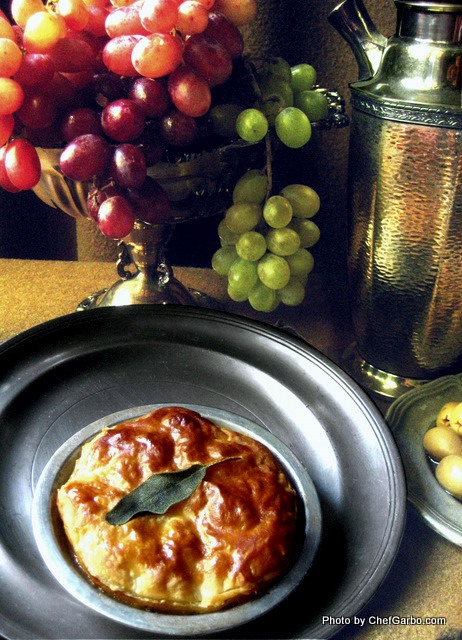
Wild Boar and Sage Meat Pie
Pork, Apple and Cider Meat Pies (Donna Hay)
Servings: 6
2 tablespoons Extra Virgin Olive Oil
2 pounds pork tenderloins, cut in cubes
1 medium onion, sliced
2 medium garlic, sliced
3 tablespoon(s) flour
3 cups apple cider
1 cup beef stock
1 medium potato, peeled copped
1 dash salt and pepper
2 medium Granny Smith apples, chopped into wedges
1 package puff pastry
1 medium egg, for wash
Directions:
Heat half the oil in a heavy sauce pan over high heat. Add the pork and cook, in batched for 3-4 minutes or until browned. Remove pork and set aside. Reduce heat to medium. Add the remaining oil, onion and garlic and cook 3-4 minutes or until softened. Add flour and cook over medium low heat for 2-3 minutes. Return the pork to the pan with the cider and stock, bring to boil and reduce heat to low and simmer, covered for 1 hour. Uncover and cook for 15 minutes. Add the potato, sage, salt and pepper and cook further for 15 minutes or until the potato is just tender. Remove from heat and stir in the apples.
Preheat oven to 400. Spoon the pork mixture into 2×2 cup-capacity ovenproof frying pan or ramekins. Roll the pastry out on a light floured surface and use the ramekins to cut out enough circles of pastry to top the pies. (About the thickness of a pie crust). Trim edges, brush with remaining egg wash and press the sage leaf into the center of each pie. Bake for 20-25 minutes until golden brown.
San Francisco Personal Chef Garbo – In The News – September 2011
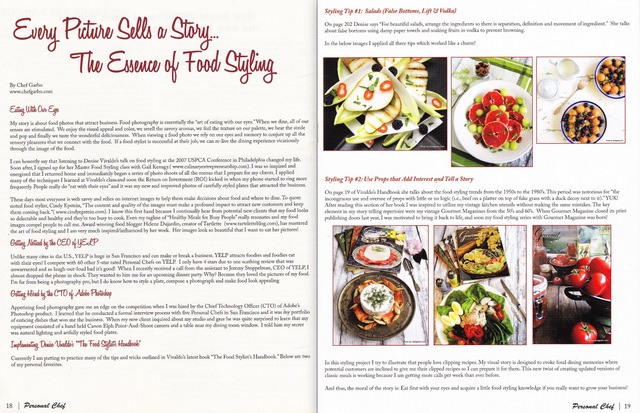
Personal chef Magazine – September 2011
Full Story: Every Picture Sells A Story – The Essence Of Food Styling
Personal Chef Magazine July/September 2011 – By Personal Chef Garbo
My story is about food photos that attract business. Food photography is essentially the “art of eating with our eyes”. When we dine, all of our senses are stimulated. We enjoy the visual appeal and color, we smell the savory aromas, we feel the texture on our palate, we hear the sizzle and pop and finally we taste the wonderful deliciousness. When viewing a food photo we rely on our eyes and memory to conjure up all the sensory pleasures that we connect with the food. If a food stylist is successful at their job, we can re-live the dining experience vicariously through the image of the food.
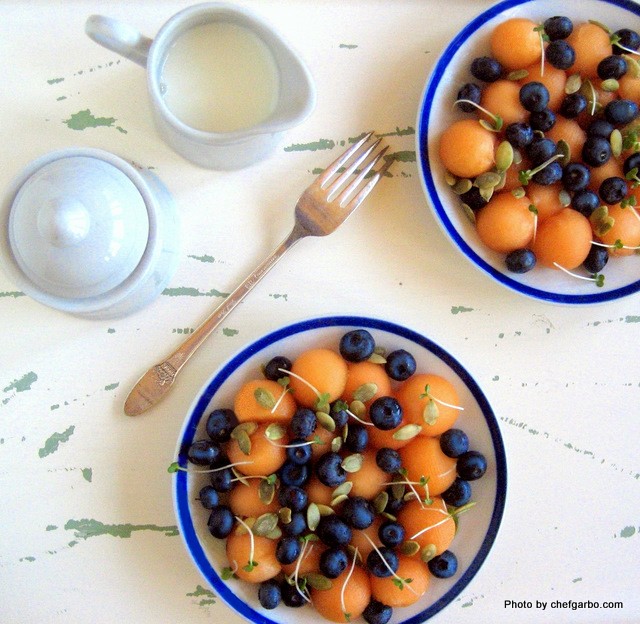
Cantaloupe & Bluberry Fruit Salad
Eating With Our Eyes
I can honestly say that listening to Denise Vivaldo’s talk on food styling at the 2007 USPCA Conference in Philadelphia changed my life. Soon after, I signed up for her Master Food Styling class with Gail Kenagy, former President of the USPCA. I was so inspired and energized that I returned home and immediately began a series of photo shoots of all the menus that I prepare for my clients. I applied many of the techniques I learned at Vivaldo’s class and soon the Return on Investment (ROI) kicked in when my phone started to ring more frequently. People really do “eat with their eyes” and it was my new and improved photos of carefully styled plates that attracted the business. Read Denise Vivaldo’s Blog post on me here.
These days most everyone is web savvy and relies on internet images to help them make decisions about food and where to dine. To quote noted food stylist, Cindy Epstein, “The content and quality of the images must make a profound impact to attract new customers and keep them coming back”. I know this first hand because I continually hear from potential new clients that my food looks so delectable and healthy and they’re too busy to cook. Even my tagline of “Healthy Meals for Busy People” really resonates and my food images compel people to call me. Award winning food blogger Helene Dujardin, creator of Tartlette, has mastered the art of food styling and I am very much inspired/influenced by her work. Her images look so beautiful that I want to eat her pictures!
Getting Noticed by the CEO of YELP
Unlike many cites in the U.S., YELP is huge in San Francisco and can make or break a business. YELP attracts foodies and foodies eat with their eyes! I compete with 60 other 5 star rated Personal Chefs on YELP. I only have 4 stars due to one scathing review that was unwarranted and so laugh-out-loud bad it’s good! When I recently received a call from the assistant to Jeremy Stoppelman, CEO of YELP, I almost dropped the phone in shock. They wanted to hire me for an upcoming dinner party. Why? Because they loved the pictures of my food. I’m far from being a photography pro, but I do know how to style a plate, compose a photograph and make food look appealing
Getting Hired by the CTO of Adobe Photoshop
Appetizing food photography gave me an edge on the competition when I was hired by the Chief Technology Officer (CTO) of Adobe’s Photoshop product. I learned that he conducted a formal interview process with 5 Personal Chefs in San Francisco and it was my portfolio of enticing dishes that won me the business. When my new client inquired about my studio and gear he was quite surprised to learn that my equipment consisted of a hand held Canon Elph Point-And-Shoot camera and a table near my dining room window. I told him my secret was natural lighting and artfully styled food plates.
Implementing Denise Vivaldo’s “The Food Stylist’s Handbook”
Currently I am putting to practice many of the tips and tricks outlined in Vivaldo’s latest book “The Food Stylist’s Handbook.” Below are two of my personal favorites:
Styling Tip #1: Salads (False Bottoms, Lift & Vodka)
On page 202 Denise says “For beautiful salads, arrange the ingredients so there is separation, definition and movement of ingredient.” She talks about false bottoms using damp paper towels and soaking fruits in vodka to prevent browning.
In the below images I applied all three tips which worked like a charm!
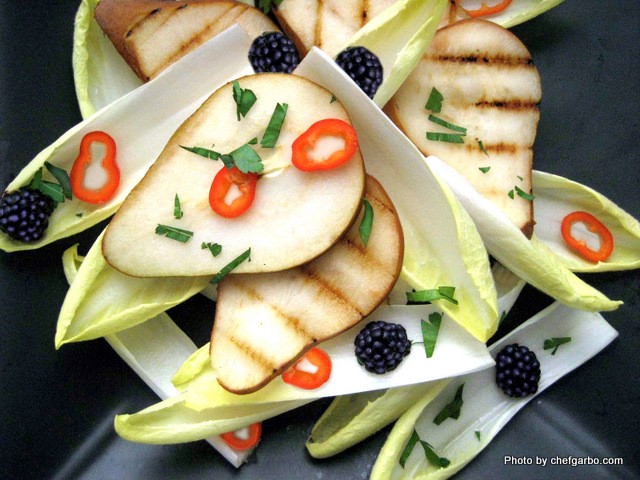
Endive Salad with Grilled Pears & Blackberries
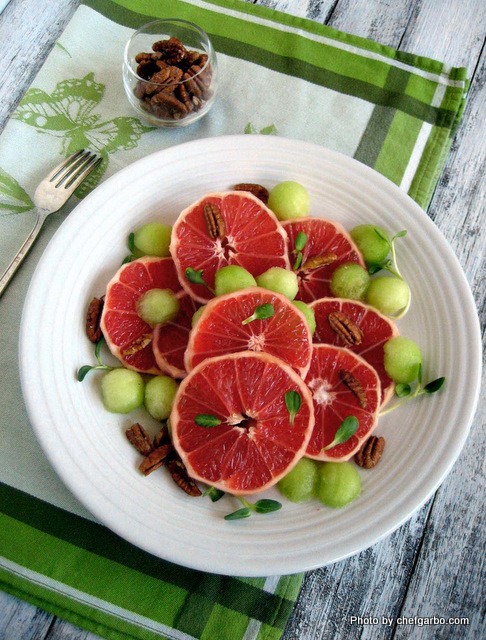
Ruby Red Grapefruit & Melon Salad
Styling Tip #2: Use Props that Add Interest and Tell a Story
On page 19 of Vivlado’s Handbook she talks about the food styling trends from the 1950s to the 1980’s. This period was notorious for “the incongruous use and overuse of props with little or no logic (i.e., beef on a platter on top of fake grass with a duck decoy next to it).” YUK! After reading this section of her book I was inspired to utilize my vintage kitchen utensils without making the same mistakes. The key element in my story telling repertoire were my vintage Gourmet Magazines from the 50’s and 60’s. When Gourmet Magazine closed its print publishing doors last year, I was motivated to bring it back to life, and soon my food styling series with Gourmet Magazine was born!
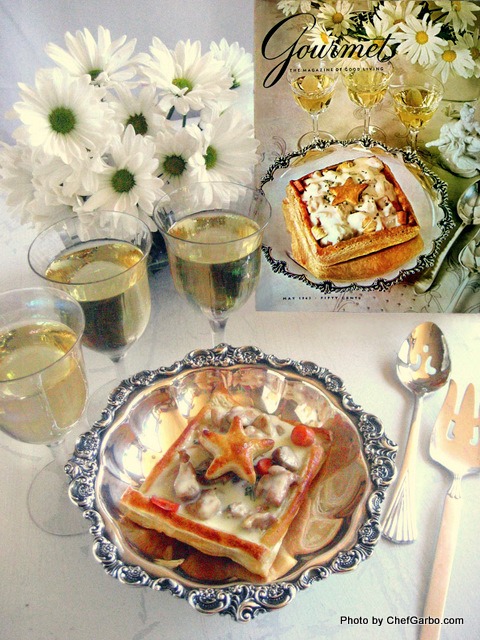
Gourmet Magazine Chicken Pot Pie Recipe – Circa 1960’s
In this styling project I try to illustrate that people love clipping recipes. My visual story is designed to evoke fond dining memories where potential customers are inclined to give me their clipped recipes so I can prepare it for them. This new twist of creating updated versions of classic meals is working because I am getting more calls per week than ever before.
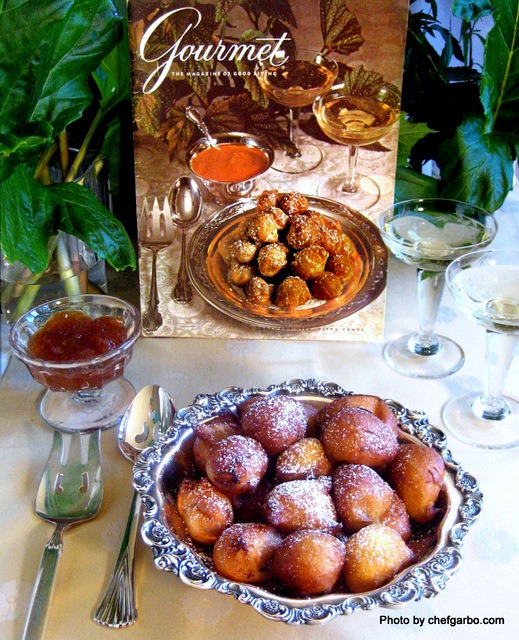
Gourmet Magazine Biegnet Recipe – Circa 1960’s
And thus, the moral of the story is: Eat first with your eyes and acquire a little food styling knowledge if you really want to grow your business!
San Francisco Personal Chef Garbo – In The News – January 2011
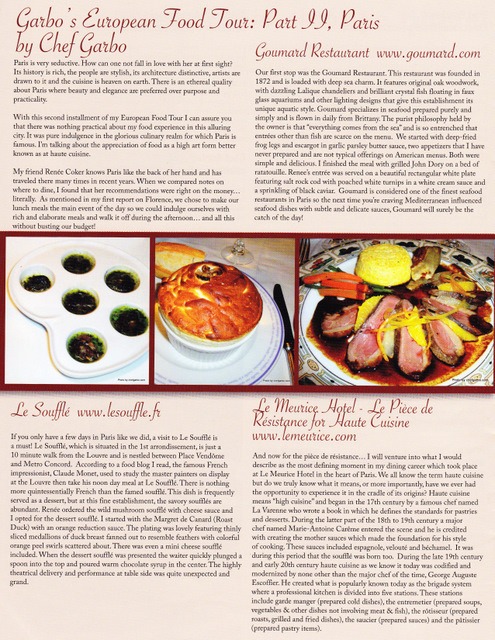
Personal Chef Magazine Article
FULL STORY: GARBO’S EUROPEAN FOOD TOUR PART: II PARIS
By Chef Garbo www.dev.chefgarbo.com
Paris is very seductive. How can one not fall in love with her at first sight? Its history is rich, the people are stylish, its architecture distinctive, artists are drawn to it and the cuisine is heaven on earth. There is an ethereal quality about Paris where beauty and elegance are preferred over purpose and practicality.
With this second installment of my European Food Tour (see Part I Florence) I can assure you that there was nothing practical about my food experience in this alluring city. It was pure indulgence in the glorious culinary realm for which Paris is famous. I’m talking about the appreciation of food as a high art form better known as at haute cuisine.
My friend Renée Coker knows Paris like the back of her hand and has traveled there many times in recent years. When we compared notes on where to dine, I found that her recommendations were right on the money… literally. As mentioned in my first report on Florence, we chose to make our lunch meals the main event of the day so we could indulge ourselves with rich and elaborate meals and walk it off during the afternoon… and all this without busting our budget!
Salt Cod – Gaumard Restaurant
Goumard Restaurant
Our first stop was the Goumrad Restaurant. This restaurant was founded in 1872 and is loaded with deep sea charm. It features original oak woodwork, with dazzling Lalique chandeliers and brilliant crystal fish floating in faux glass aquariums and other lighting designs that give this establishment its unique aquatic style. Goumrad specializes in seafood prepared purely and simply and is flown in daily from Brittany. The purist philosophy held by the owner is that “everything comes from the sea” and is so entrenched that entrées other than fish are scarce on the menu. We started with deep-fried frog legs and escargot in garlic parsley butter sauce, two appetizers that I have never prepared and are not typical offerings on American menus. Both were simple and delicious. I finished the meal with grilled John Dory on a bed of ratatouille. Renee’s entrée was served on a beautiful rectangular white plate featuring salt rock cod with poached white turnips in a white cream sauce and a sprinkling of black caviar. Goumard is considered one of the finest seafood restaurants in Paris so the next time you’re craving Mediterranean influenced seafood dishes with subtle and delicate sauces, Goumard will surely be the catch of the day!
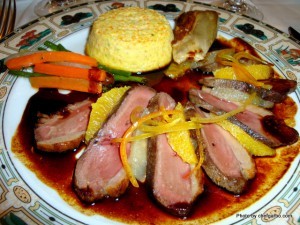
Le Souffle Duck
Le Soufflé
If you only have a few days in Paris like we did, a visit to Le Soufflé is a must! Le Soufflé, which is situated in the 1st arrondissement, is just a 10 minute walk from the Louvre and is nestled between Place Vendôme and Metro Concord. According to a food blog I read, the famous French impressionist, Claude Monet, used to study the master painters on display at the Louvre then take his noon day meal at Le Soufflé. There is nothing more quintessentially French than the famed soufflé. This dish is frequently served as a dessert, but at this fine establishment, the savory soufflés are abundant. Renée ordered the wild mushroom soufflé with cheese sauce and I opted for the dessert soufflé. I started with the Margret de Canard (Roast Duck) with an orange reduction sauce. The plating was lovely featuring thinly sliced medallions of duck breast fanned out to resemble feathers with colorful orange peel swirls scattered about. There was even a mini cheese soufflé included. When the dessert soufflé was presented the waiter quickly plunged a spoon into the top and poured warm chocolate syrup in the center. The highly theatrical delivery and performance at table side was quite unexpected and grand.
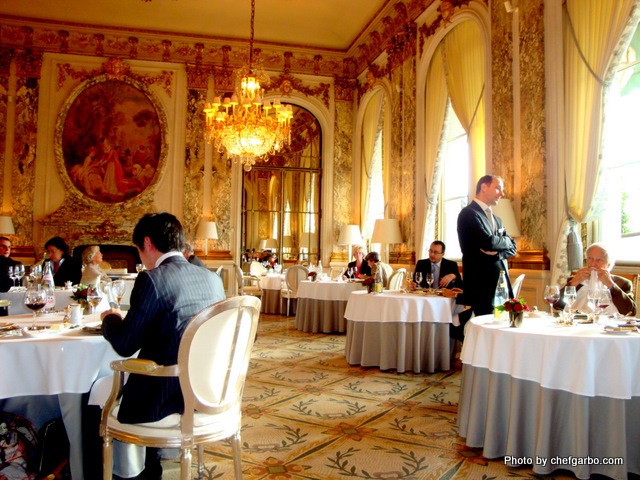
Le Murice Dining Room
Le Meurice Hotel – Le Pièce de Résistance for Haute Cuisine
And now for the pièce de résistance… I will venture into what I would describe as the most defining moment in my dining career which took place at Le Meurice Hotel in the heart of Paris. We all know the term haute cuisine but do we truly know what it means, or more importantly, have we ever had the opportunity to experience it in the cradle of its origins? Haute cuisine means “high cuisine” and began in the 17th century by a famous chef named La Varenne who wrote a book in which he defines the standards for pastries and desserts. During the latter part of the 18th to 19th century a major chef named Marie-Antoine Carême entered the scene and he is credited with creating the mother sauces which made the foundation for his style of cooking. These sauces included espagnole, velouté and béchamel. It was during this period that the soufflé was born too. During the late 19th century and early 20th century haute cuisine as we know it today was codified and modernized by none other than the major chef of the time, George Auguste Escoffier. He created what is popularly known today as the brigade system where a professional kitchen is divided into five stations. These stations include garde manger (prepared cold dishes), the entremetier (prepared soups, vegetables & other dishes not involving meat & fish), the rôtisseur (prepared roasts, grilled and fried dishes), the saucier (prepared sauces) and the pâtissier (prepared pastry items).
George Auguste Escoffier‘s influence was so great that many Grand Hotels were opened around his style of cooking. Le Meurice Hotel is a product of this period dating back to 1835 and has long been considered the prized jewel among the French palace hotels. Located directly across from les Jardin des Tuileries, Le Meurice is a magical place with splendid architectural touches where one is treated like royalty. Famous guests include Queen Victoria, the King of Spain, Alphonse XIII, King George VI and the Grand Duchess of Russia. The most outrageous and loved guest among the hotel staff was Salvador Dali who stayed there one month every year. He’s famous for his surreal requests like ordering flies from the Tuileries or asking that a horse be delivered to his room. He was even known to dangle fish off a fishing line from his hotel room balcony onto the passers by below.
Dining at Le Maurice Restaurant is otherworldly. The décor is regal with a painted mural ceiling, shimmering crystal chandeliers, antique gold gilt beveled mirrors and gigantic canvases hung on the walls which are all reminiscent of the magnificent Napoleon Salon in the Louvre. The Chef de Cuisine, Yannik Alléno, fashioned the most memorable meal of my life. He helped Le Meurice to capture 2 Michelin stars starting from zero in one year which is a first in the history of the Red Michelin Guide. At age 38, he was inducted into the elite circle of the world’s greatest chefs when he received his third star for his gastronomic genius. He is also a 1st place recipient of the Auguste Escoffier International Prize, Nice 2008.
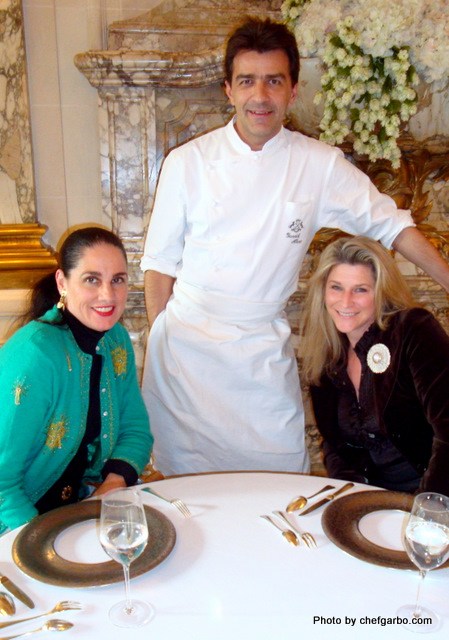
Chef Yannik Alléno – Le Meurice Hotel
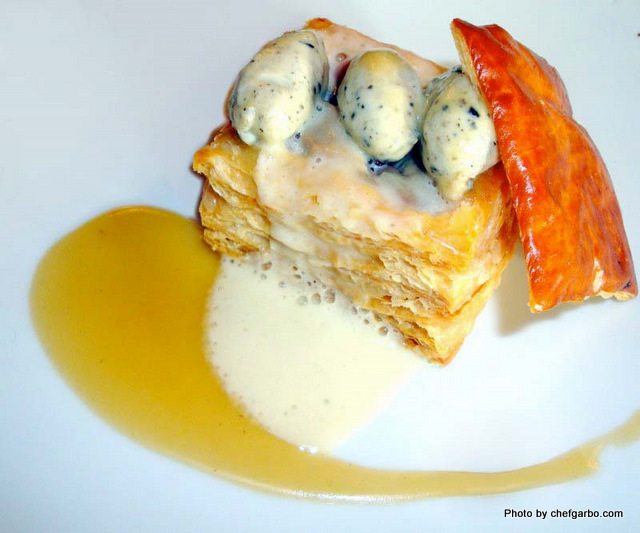
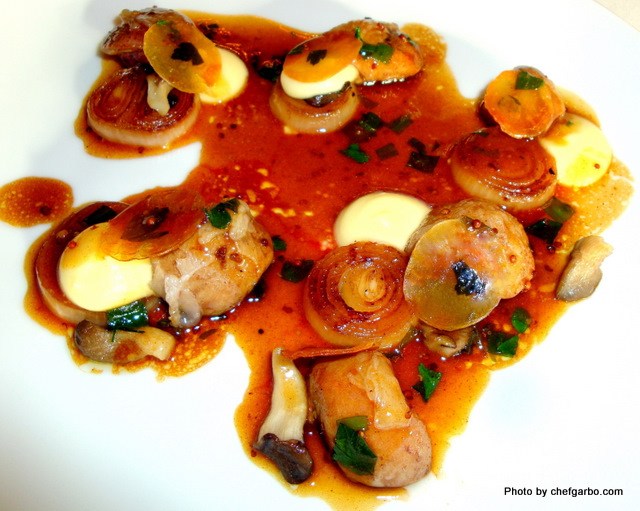
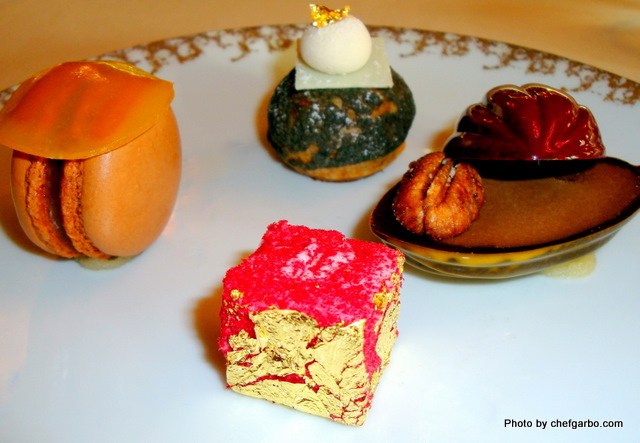
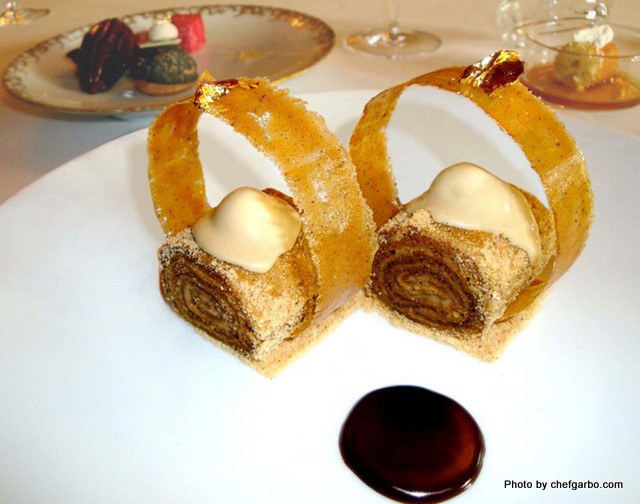
The culinary creations of Yannik Alléno are poetic magic. As the leader of a brigade of 74, this visionary chef has ambitions of reinventing haute cuisine and dreams of taking the hotel’s restaurant to new heights in it’s already world renown reputation. Judging from our lunch I can say he’s near the summit. Our meal was breathtaking. It started with a selection of bread and a checker-board square of foie gras pate and butter that was very appealing. Then an amuse bouche of custard, green aspic and foam with a black wafer was served followed by another amuse bouche of filet of soul with a caramelized cream sauce. Both had ingenious presentations. There were two entrées as well. The first was an ensemble of chicken pate shaped like robin eggs atop of nest of puff pastry and when sliced open there were more chicken pieces inside with a rich cream sauce. The chicken had a wonderful farm fresh and mild gamey flavor that you don’t get in the States. The second entrée was a plate of small kidney medallions with caramelized onions and slivered mushrooms in a reduction sauce. Both were visual masterpieces! Have you ever had a pre-dessert? Well we did and it was delightful. The first plate featured a chocolate pecan shell filled with chocolate ganache with a glazed pecan on top. There was a square pink marshmallow bon-bon with gold leaf on the sides, a chocolate macaroon and a variation on a profiterole gilded in gold leaf. The second dessert was a tiramisu-like jelly roll sponge cake encircled with a thin ring of sugar glass topped with espresso cream sauce. Oh, did I mention that there was a petite rum baba served in addition to the two desserts? And as if this wasn’t enough, in came the traditional cheese plate. Make that a long gorgeous marble table with golden legs topped with an impressive array of French cheeses, dried fruits and grapes. A simply wonderful way to end an exceptional dining experience. Everything right down to the puff pastry is made fresh daily!
Dinner at Le Meruice will set you back financially. But if you desire an opulent, extraordinary and reasonably priced 8 course afternoon meal ($100 excluding wine) then lunch is the way to go. Look no further than Le Meurice Restaurant as you will experience haute cuisine at its finest! And in the famous European tradition you will be personally welcomed by Chef Yannik Alléno himself!
What a perfect ending to a marvelous culinary tour de force of both Florence and Paris.
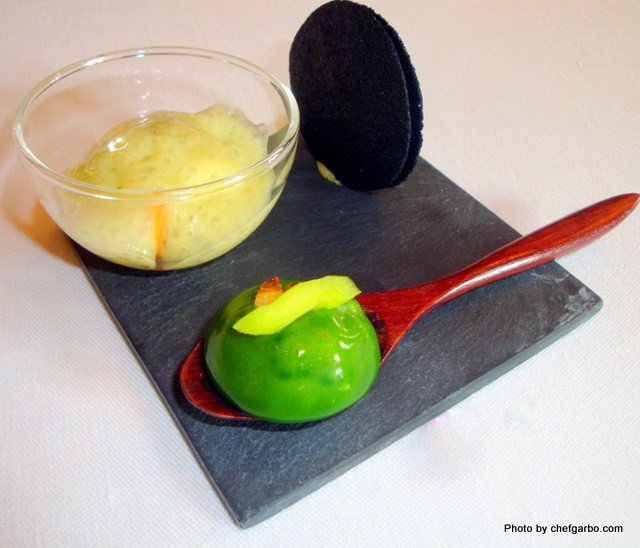
Aspic Amuse Bouche – Le Meurice
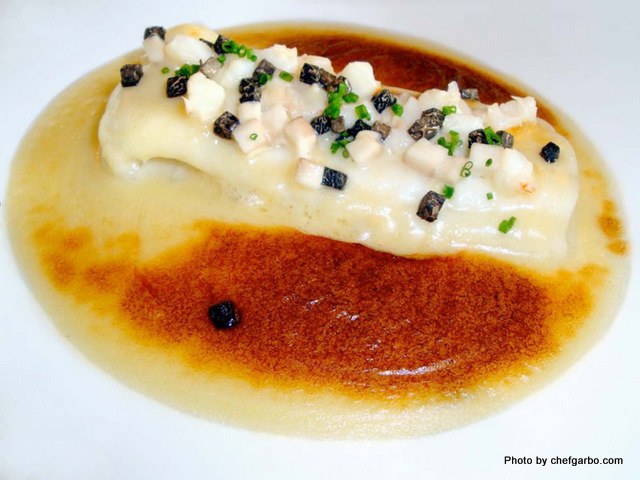
- 2nd Amuse Bouche, Filet of Sole – Le Meurice
- Entree, Chicken Nest Eggs – Le Meurice
- Entree, Sautéed Kidney & Onions – Le Meurice
- 1st Dessert – Le Meurice
- 2nd Dessert – Le Meurice
San Francisco Personal Chef Garbo – In The News
Personal Chef Magazine October – December 2010 Issue
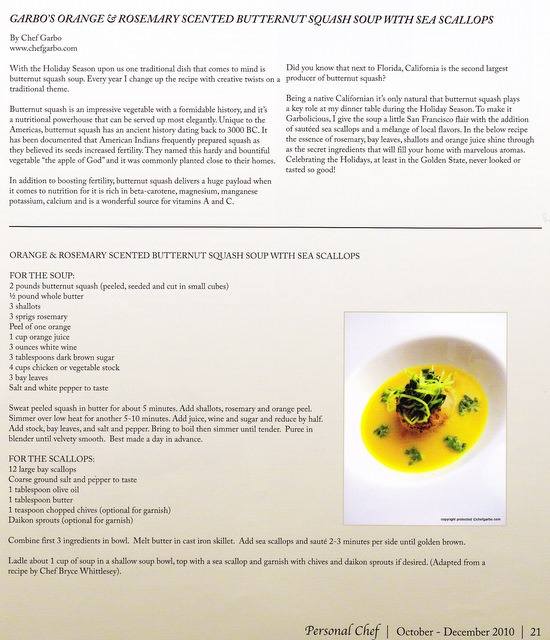
- Personal Chef Magazine Article
Garbo’s Orange & Rosemary Scented Butternut Squash Soup with Seared Scallops
With the Holiday Season upon us one traditional dish that comes to mind is butternut squash soup. Every year I change up the recipe with creative twists on a traditional theme.
Butternut squash is an impressive vegetable with a formidable history, and it’s a nutritional powerhouse that can be served up most elegantly. Unique to the Americas, butternut squash has an ancient history dating back to 3000 BC. It has been documented that American Indians frequently prepared squash as they believed its seeds increased fertility. They named this hardy and bountiful vegetable “the apple of God” and it was commonly planted close to their homes.
In addition to boosting fertility, butternut squash delivers a huge payload when it comes to nutrition for it is rich in beta-carotene, magnesium, manganese potassium, calcium and is a wonderful source for vitamins A and C.
Did you know that next to Florida, California is the second largest producer of butternut squash?
Being a native Californian it’s only natural that butternut squash plays a key role at my dinner table during the Holiday Season. To make it Garbolicious I give the soup a little San Francisco flair with the addition of sautéed sea scallops and a mélange of local flavors. In the below recipe the essence of rosemary, bay leaves, shallots and orange juice shine through as the secret ingredients that will fill your home with marvelous aromas. Celebrating the Holidays, at least in the Golden State, never looked or tasted so good!
Recipe for Orange & Rosemary Scented Butternut Squash Soup with Sea Scallops
FOR THE SOUP:
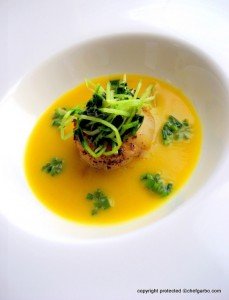
- Seared Scallops with Butternut Squash Soup Soup
2 pounds butternut squash (peeled, seeded and cut in small cubes)
½ pound whole butter
3 shallots
3 sprigs rosemary
Peel of one orange
1 cup orange juice
3 ounces white wine
3 tablespoons dark brown sugar
4 cups chicken or vegetable stock
3 bay leaves
Salt and white pepper to taste
Sweat peeled squash in butter for about 5 minutes. Add shallots, rosemary and orange peel. Simmer over low heat for another 5-10 minutes. Add juice, wine and sugar and reduce by half. Add stock, bay leaves, and salt and pepper. Bring to boil then simmer until tender. Puree in blender until velvety smooth. Best made a day in advance.
FOR THE SCALLOPS:
12 large bay scallops
Coarse ground salt and pepper to taste
1 tablespoon olive oil
1 tablespoon butter
1 teaspoon chopped chives (optional for garnish)
Daikon sprouts (optional for garnish)
Combine first 3 ingredients in bowl. Melt butter in cast iron skillet. Add sea scallops and sauté 2-3 minutes per side until golden brown.
Ladle about 1 cup of soup in a shallow soup bowl, top with a sea scallop and garnish with chives and daikon sprouts if desired. (Adapted from a recipe by Chef Bryce Whittlesey).
Chef Garbo in Cooking Light Magazine August 2010 Issue

- Chef Garbo in USPCA Ad for Cooking Light Magazine
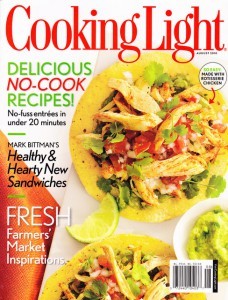
- Chef Garbo in Cooking Light Magazine 2010
Check out my 15 minutes of fame in the August issue of Cooking Light Magazine. I am honored to be the featured Chef for a USPCA advertisement showcasing the Culinary Business Academy where I went to school. It’s a bit unreal standing at the checkout counter at Whole Foods, or any retail venue for that matter, knowing that my mug is in a hugely popular cooking magazine nationwide.
There are quite a few summer grilling recipes as well. Check it out and let me know what you think!